Yala National Park Photography Guide: Camera Settings, Tips, and Best Spots for Wildlife Photography
Yala National Park is one of the finest wildlife photography destinations in Asia. The combination of habituated leopards, diverse habitats across Block 1 and Block 5/6, extraordinary birdlife at Palatupana Lagoon, and reliable golden hour light creates conditions that professional wildlife photographers travel from around the world to experience. But arriving with expensive equipment is only part of the equation. Understanding how to use that equipment from a moving jeep, in rapidly changing light, with unpredictable animal subjects, is what separates the photographs you will print large and frame from the ones that stay buried in a hard drive folder. This guide covers everything you need to know to return from Yala with images you are genuinely proud of.
Why Yala is Exceptional for Wildlife Photography
Most wildlife photography destinations require compromise. Either the animals are present but the light is poor, or the light is extraordinary but subjects are distant and obscured by vegetation, or sighting conditions are ideal but vehicles crowd the animal making calm, composed shooting impossible.
Yala's Block 1 removes many of these compromises simultaneously. The leopards are habituated to vehicles and will tolerate close approaches that would be impossible with wild, unhunted cats in other locations. The open terrain of the dry season creates clear, unobstructed sightlines across distances that work beautifully with telephoto lenses. The consistent morning and afternoon golden hour light in Sri Lanka's Southern Province is warm, directional, and flattering for both animal portraits and environmental wildlife images. And the diversity of species and habitats means that even a single morning drive offers dozens of photographic opportunities across completely different subjects.
The challenge is working within the specific constraints of jeep-based photography: vibration, limited positioning flexibility, unpredictable animal movement, and the physical demands of being alert and ready for hours at a time in changing conditions.

Camera Equipment for Yala Safaris
Telephoto Lenses
A telephoto lens is the most important piece of equipment for Yala wildlife photography. The park rules require vehicles to maintain distances from animals, and even the habituated leopards of Block 1 are not subjects you photograph with a 50mm lens. Understanding what focal length you need for different subjects helps you prepare appropriately.
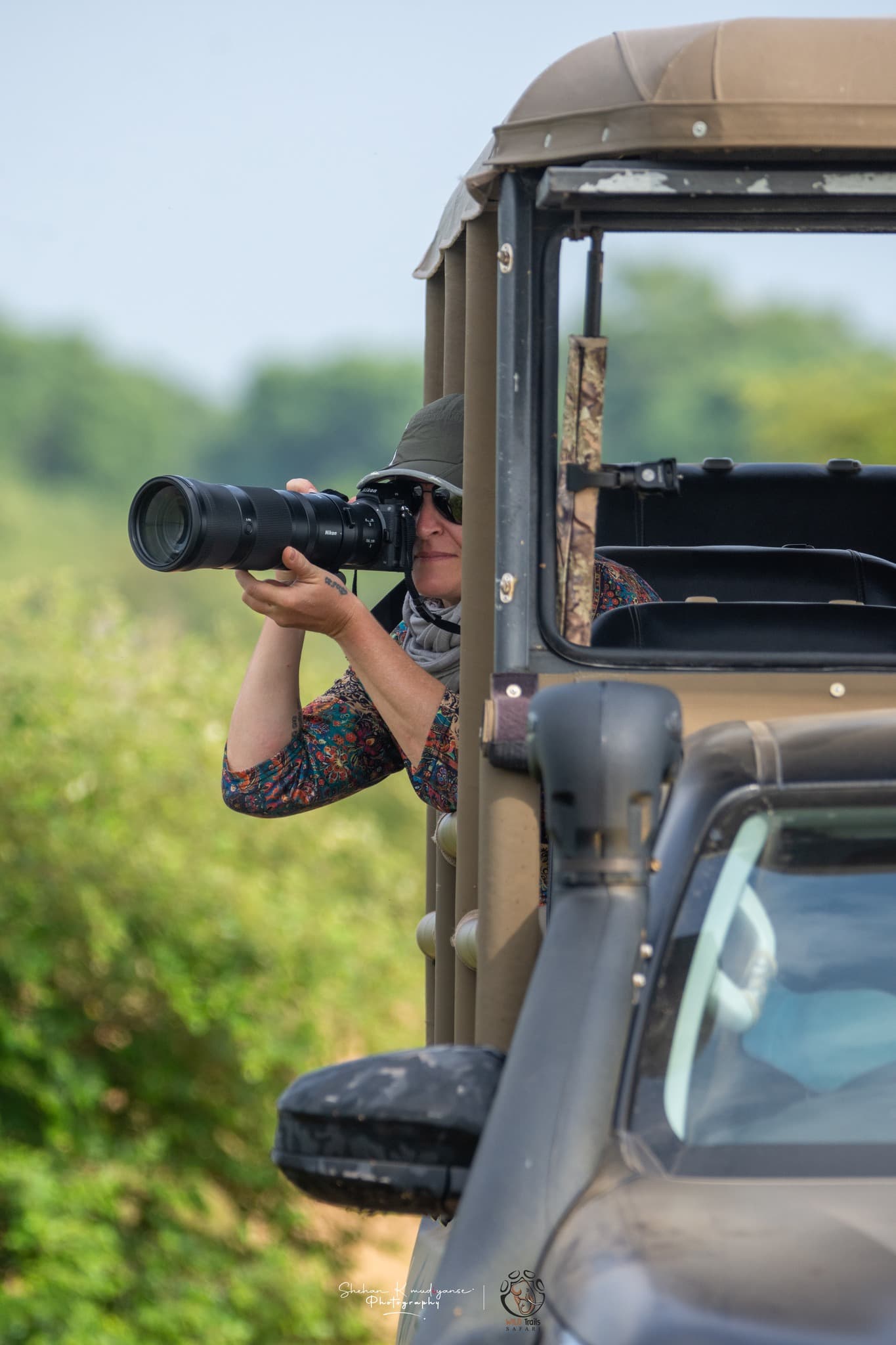
For leopards on rocky outcrops at typical Block 1 viewing distances, a 400mm lens on a full-frame body or a 300mm lens on a crop sensor body provides excellent working distances. A 500mm or 600mm lens gives you more flexibility to create tighter compositions and to maintain good image quality when animals are at maximum distance.
For birds at Palatupana Lagoon, focal length requirements vary enormously. Flamingos in large flocks call for wider focal lengths to capture the spectacle contextually. Individual bird portraits require 500mm or more. A 100-400mm zoom gives excellent flexibility for varied bird photography situations.
For environmental portraits that show the animal in its habitat, rather than tight face shots, a shorter telephoto in the 200-300mm range often produces more compelling images. Some of the most memorable Yala photographs show a leopard as a relatively small element within the dramatic landscape of Block 1's rocky terrain.
Camera Bodies
Any modern mirrorless or DSLR body with good high-ISO performance and a reasonably fast continuous autofocus system will serve you well at Yala. The key specifications to prioritize are autofocus tracking capability (critical for moving leopards), burst rate (ten frames per second minimum for action sequences), and high-ISO noise performance (important for the first and last thirty minutes of light when animals are most active but illumination is minimal).
The improved subject recognition autofocus systems in recent mirrorless bodies from Sony, Canon, and Nikon have transformed wildlife photography. Animal eye-detection autofocus systems that lock onto a leopard's eye and track it as the animal moves through varied backgrounds are genuinely transformative for jeep-based photography where you cannot always use a tripod or monopod for stability.

Support Systems
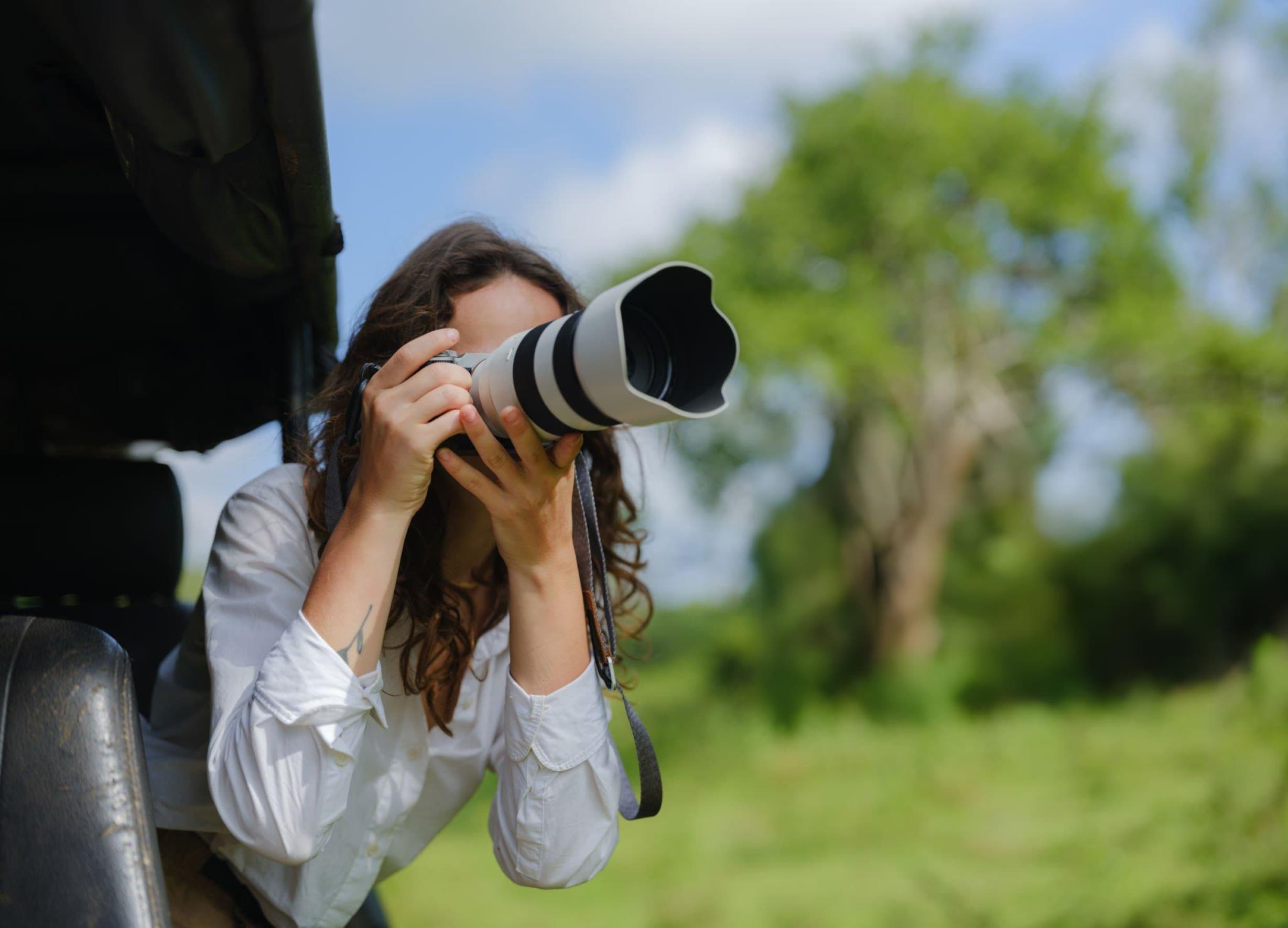
Shooting handheld from a jeep with a heavy telephoto lens is possible but physically demanding and produces more keeper images when the lens is properly supported. Several options work well in a safari jeep context.
A bean bag is the simplest and most versatile jeep photography support. A soft bag filled with dried beans or rice conforms to the window ledge shape, providing a stable resting surface for the lens. It is lightweight, packs flat, and requires no assembly time when a sighting appears suddenly.
A window mount clamp with a ball head provides more stable and precise control than a bean bag, but requires some setup time. On a planned extended observation at a single sighting point this is an excellent option. For fast-moving encounters where you need to swing the lens quickly it can feel restrictive.
Whatever support system you use, the most important practice is switching off the vehicle engine during shooting. Engine vibration transmitted through the vehicle body is the single biggest cause of soft, slightly blurred images from jeep-based photography. Ask your guide to cut the engine at every sighting and during every serious shooting session. A good naturalist guide will do this instinctively without being asked.
Accessories to Bring
Lens cloths are essential at Yala. Block 1 dust in the dry season settles on everything constantly, and front lens elements require regular cleaning. Bring more lens cloths than you think you need. A blower brush for removing dust before wiping is important to avoid scratching coatings.
Extra batteries are critical. Cold air conditioning on accommodation nights can drain batteries faster than expected, and a full day safari requires at least two fully charged batteries for a high-burst-rate shooting session.
Large capacity, fast memory cards appropriate for your burst rate. Running out of card space at the moment a leopard starts moving toward the jeep is a genuinely painful experience that happens to unprepared photographers.
A lightweight rain cover for your camera and lens. Even during dry season months, unexpected brief showers occur. Having protection immediately accessible rather than buried in a bag is important. During wet season months (August through January) rain protection is essential rather than optional.
Camera Settings for Yala Wildlife Photography
The Fundamental Priority: Shutter Speed
The single most important camera setting for wildlife photography at Yala is shutter speed. Everything else is secondary. A sharp image at a technically imperfect exposure is infinitely more valuable than a perfectly exposed blurry one.
For stationary leopards on rocks in good light, a minimum shutter speed of 1/500 second is recommended. This freezes minor body movements like breathing and tail flicks that will otherwise produce soft images at slower speeds.
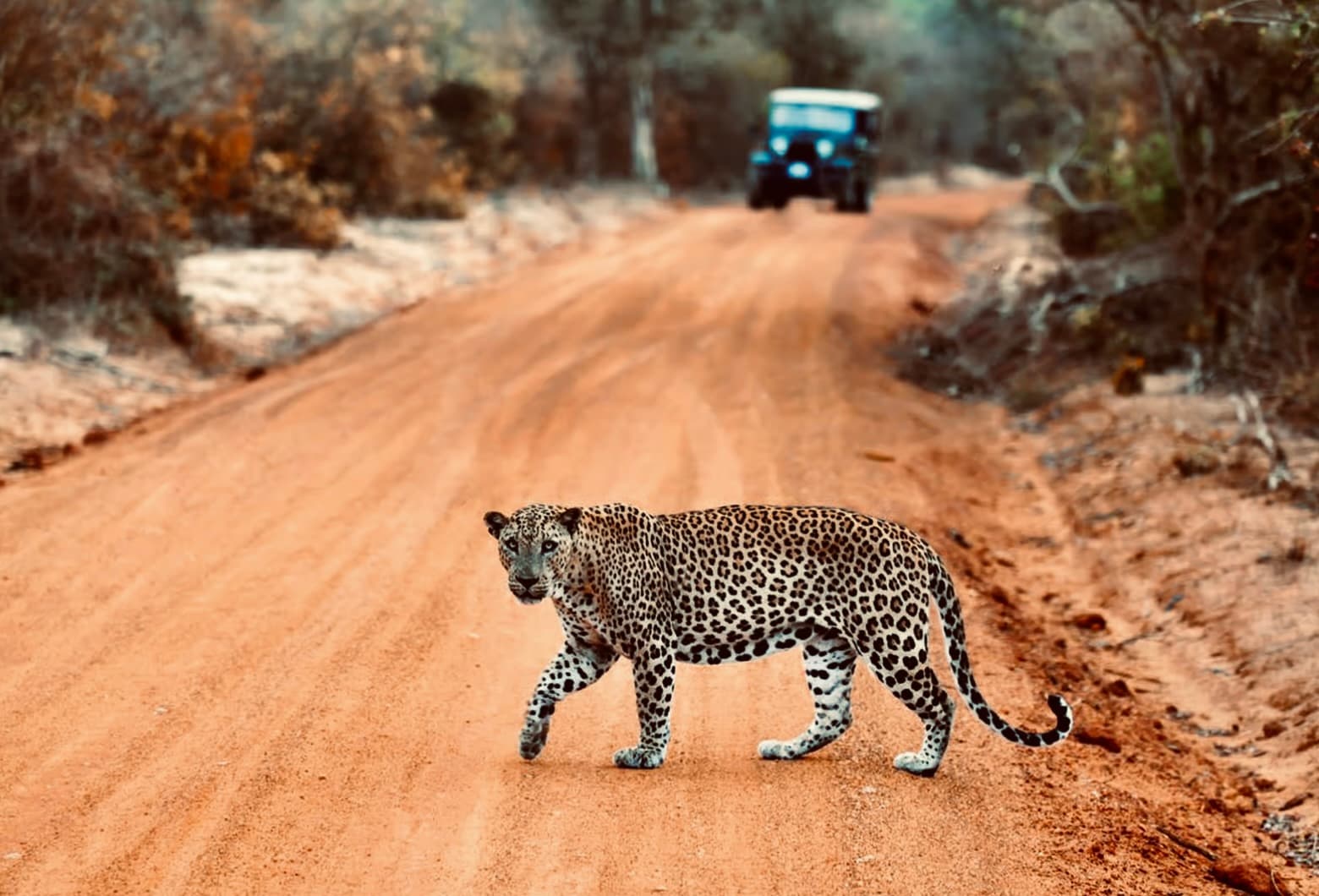
For moving leopards walking, trotting, or any purposeful movement, 1/1000 second minimum and 1/2000 second preferred. A leopard transitioning from stationary to a fast trot can reach full speed in a fraction of a second. Keeping your shutter fast enough for the movement you cannot predict is always safer than optimizing for the movement you can currently see.
For birds in flight at Palatupana Lagoon, 1/2000 second minimum. Flamingos and storks in flight require fast shutter speeds to freeze wing positions clearly, and many photographers target 1/3200 second for crisp feather detail throughout the wing stroke.

ISO and Aperture
Set your camera to aperture priority or manual mode with auto-ISO to maintain your target shutter speed automatically as light conditions change. In Yala's variable lighting — bright open scrub transitioning to shaded forest tracks within seconds — manual ISO management slows your reaction time at precisely the moments you cannot afford to be adjusting settings.
For aperture, the classic wildlife photography approach of using maximum aperture for subject isolation applies at Yala but with nuance. A leopard resting alone on a rock is a perfect subject for maximum aperture to throw the background out of focus. A leopard walking through scrub where you want some environmental context works better at a moderate aperture that keeps more of the scene in focus.
For ISO, modern camera sensors handle ISO 1600 to 3200 with minimal visible noise when images are properly exposed. Do not be afraid of higher ISOs during the first and last thirty minutes of light — a well-exposed ISO 3200 image is significantly better than an underexposed ISO 400 image lifted in post-processing.
Autofocus Settings
For predictable stationary subjects like basking leopards, single-point autofocus placed on the animal's eye is the most precise approach. For moving subjects or when shooting in burst mode through vegetation gaps, continuous autofocus with wide-area tracking activated performs better because it maintains focus through brief obstructions.
Animal eye-detection autofocus, available on most recent mirrorless systems, is genuinely transformative for Yala leopard photography. Set it up before you enter the park gates so it activates immediately when a sighting occurs rather than requiring menu navigation at a critical moment.
Light: The Most Critical Variable
Golden Hour at Yala
The golden hour at Yala is among the finest in Asia. The Southern Province location, combined with the low humidity of the dry season, creates a quality of dawn and dusk light that photographers describe as extraordinary. During April and May at peak dry season, the first thirty minutes after sunrise cast a warm amber light across Block 1's golden scrubland that transforms even ordinary subjects into spectacular images.
A leopard resting on a rock with early morning golden light on its face against a darker shadowed background is possibly the finest single wildlife photography opportunity available in South Asia. Achieving this image requires entering Block 1 at exactly 6:00 AM, driving directly to known rocky territory, and positioning before the light angle changes.

The afternoon golden hour from around 4:30 PM onward is equally valuable for different reasons. The lower sun angle from the west creates dramatic side lighting on animals moving through open scrub, and the warm tone of the light produces a completely different aesthetic from the blue-tinged morning light.
Midday Light
The midday sun from approximately 10:00 AM to 3:00 PM at Yala creates harsh overhead light that most wildlife photographers find deeply unflattering. Deep shadows under the eyes and chin, blown-out highlights on pale areas, and flat, contrasty illumination are the hallmarks of midday wildlife images that most photographers find difficult to work with.
However, midday is not worthless. Overcast conditions during the wet season produce soft, diffused light that can be beautiful for close animal portraits throughout the day. And subjects in shade — a leopard resting under a tree canopy, elephants in forest shadow — can produce excellent images in midday because the ambient shade light is far softer than the direct sun.
Overcast and Wet Season Light
Many photographers overlook wet season Yala because they assume poor light equals poor photography. In reality, overcast conditions produce some of the most flattering wildlife portraits of the year. The even, diffused illumination eliminates harsh shadows, reveals detail in both highlight and shadow areas simultaneously, and creates a soft, rich quality particularly suited to animal portrait photography.
The wet season also transforms Yala's landscape from golden-brown to vibrant green, creating a completely different palette for environmental wildlife images. A leopard photographed against lush green Block 5/6 vegetation in November looks dramatically different from the same subject against dry golden scrub in April, and both images have genuine artistic value.
Best Photography Locations in Block 1
Rocky Outcrops at Dawn
The scattered rocky outcrops throughout Block 1 are Yala's signature photography locations. Arriving at these formations within the first thirty minutes after gate opening, when light is at its most beautiful and leopards are most likely to be in exposed positions, produces the images that define a Yala photography trip.
Position the jeep so that the rock formation is slightly below your shooting angle if possible, which produces more flattering perspective on resting animals. Shoot toward the light rather than away from it whenever the sighting allows. A leopard on a rock with backlit rim light against a dark background can be beautiful but requires careful exposure to retain detail.

Menik River Corridor
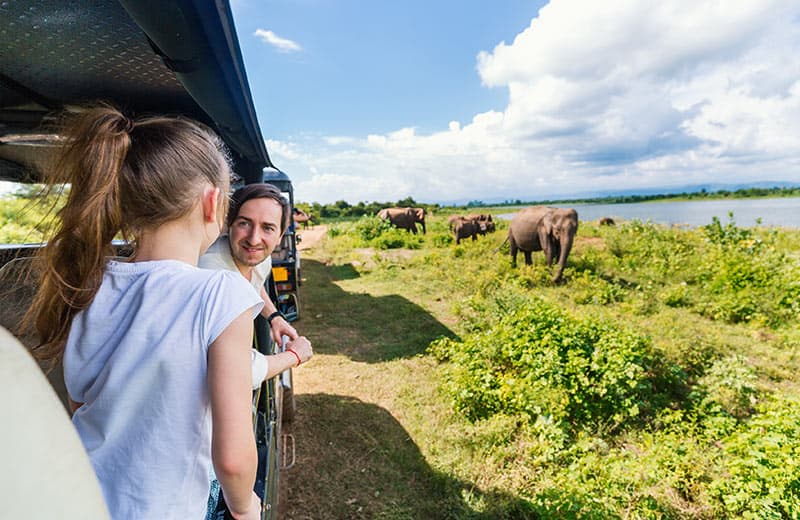
The Menik River corridor offers a completely different photography environment from the open scrub of Block 1's interior. The river's bank vegetation creates natural frames for animal portraits, the water surface provides foreground interest and reflections, and the consistent presence of elephants, crocodiles, and birds creates a multi-species photography scene that rewards patient observation.
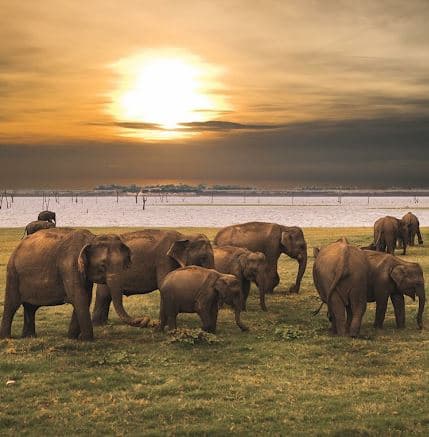
Early morning at the Menik River with low-angle light catching the water surface, an elephant herd drinking in the background and a mugger crocodile in the foreground, represents the kind of layered, complex wildlife composition that takes time and patience to set up properly. Ask your guide to stop at river viewpoints and spend time composing rather than simply driving past.
Palatupana Lagoon
Palatupana Lagoon requires a different photographic approach from the scrub-based leopard and mammal photography of Block 1's interior. The scale of the lagoon, with birds spread across a large water surface, means that individual bird portraits require the longest telephoto lenses you have. Wide environmental shots capturing the spectacle of hundreds of flamingos against an early morning sky work at shorter focal lengths and can be genuinely spectacular.
The best light at Palatupana is at sunrise when the sky turns pink and gold behind the birds. Position for silhouette shots at this moment rather than fighting the backlit conditions for exposed bird photography. Once the sun clears the horizon the light quality changes quickly.

Open Track Edges at Dawn
Some of Block 1's most unexpected photography opportunities come from the open jeep tracks themselves in the first thirty minutes after gate opening. Leopards walking along tracks, jackals investigating interesting scents, spotted deer stags with backlit antlers, and peafowl males beginning early displays — all of these encounters happen on the tracks themselves rather than the bush beyond.
Guides who drive slowly with windows fully lowered and eyes scanning track edges during the opening drive rather than rushing to known sighting locations often encounter these spontaneous track-based subjects that produce some of the most natural-looking wildlife images of a trip.
Composing Wildlife Photographs at Yala
Eye Level and the Animal's Perspective
The most compelling wildlife images are almost always made at the animal's eye level rather than from above. From a jeep this is difficult to control completely, but there are techniques that help. Lowering yourself in the seat when animals are at ground level reduces the shooting angle. Shooting through the window opening rather than over the roof eliminates the height advantage of standing in the vehicle. Choosing jeep positions at the base of rock formations rather than above them brings your eye level closer to subjects resting on rocks.
Including Habitat Context
The standard wildlife photography instinct is to fill the frame with the animal and eliminate distracting background. At Yala this approach produces technically competent images that fail to capture what makes the location extraordinary. A leopard filling 80% of the frame looks similar photographed anywhere in the world. A leopard occupying 20% of a horizontal composition that shows the rocky landscape of Block 1, the golden scrubland beyond, and the blue sky above — that image is unmistakably Yala.
Practice switching between tight portrait compositions and wider environmental compositions during the same sighting. The wider images are often the ones that resonate most strongly when you review the trip afterward.

Patience and the Decisive Moment
The most important compositional advice for Yala photography has nothing to do with settings or technique. It is patience. The photographers who return with the finest images from Yala are those who find a productive sighting and stay with it long enough for the animal to move into the best light, adopt the most expressive posture, and create the decisive moment rather than simply documenting the animal's presence.
At a leopard resting sighting, rather than taking fifty shots of the same position in the first five minutes and driving away satisfied, stay and observe. The leopard may yawn, displaying the extraordinary length of its canine teeth. It may stand and stretch, showing the full elegant length of its body. It may make eye contact with your vehicle at the precise moment the morning light touches its face. These moments require presence, patience, and a finger already on the shutter.
Practical Photography Tips for Your Yala Safari
Arrive with equipment ready before entering the gate. Batteries installed and charged, memory cards formatted and inserted, settings pre-configured for wildlife shooting. The first thirty minutes inside Block 1 are the most productive of the day and you cannot afford to spend them adjusting equipment.
Communicate with your guide about photography needs. Tell your guide before you enter the park that photography is a priority, that you want the engine off at every sighting, and that you prefer longer time at individual subjects over covering maximum ground. A guide who understands your photography goals will orient the entire drive accordingly.
Shoot in RAW format. Yala's varied lighting conditions — from deep shade in forest patches to bright open scrub — create exposure challenges that RAW files handle far better than JPEGs. The ability to recover highlights or lift shadows in post-processing without quality loss is essential for consistent results across a full morning of varied conditions.
Review images at midday. Use the midday period when wildlife activity is lowest to review your morning's shooting on a laptop or tablet. Identifying what worked and what needs adjustment helps you approach the afternoon safari with specific goals and improved technique.
Protect equipment from dust. Block 1 dust in the dry season is pervasive and damaging to camera mechanisms. Keep equipment covered when not actively shooting. Use a blower on lens elements before wiping. Consider a rain cover that doubles as a dust cover for your primary setup.

Block 5/6 for Photography
Block 5/6 offers a fundamentally different photography experience from Block 1 that appeals strongly to photographers who have already explored Block 1 or who prioritize photographic quality over encounter frequency.
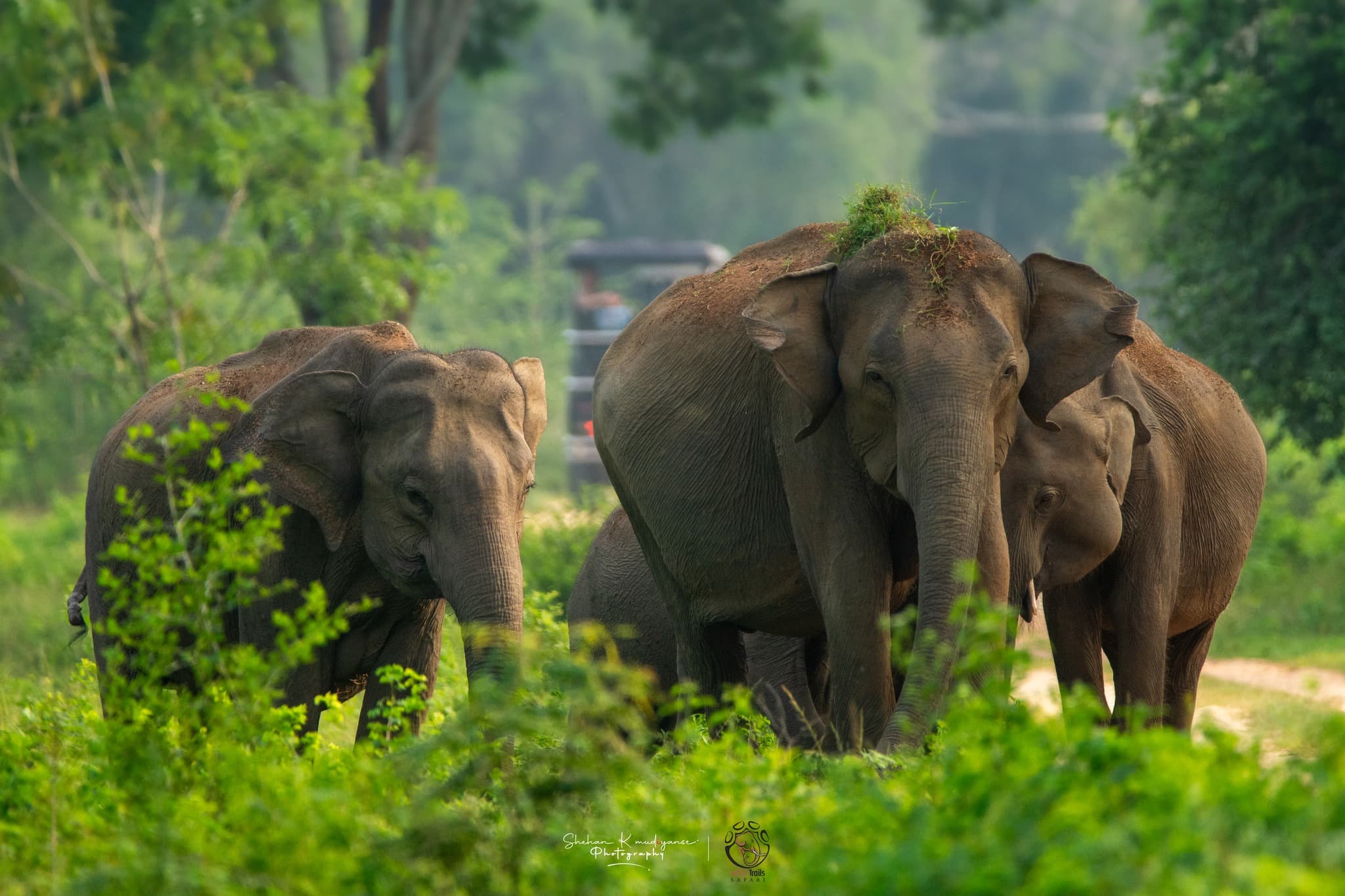
The near-complete absence of other jeeps in Block 5/6 means that any animal encounter you have is yours alone. No competing vehicles angling for position. No engine noise from other jeeps disturbing animal behavior. No pressure to move on because others are waiting. You can position your vehicle precisely where the light is best, wait as long as needed for the right moment, and compose without compromise.
The denser vegetation of Block 5/6 creates different compositional opportunities from Block 1's open terrain. Animals partially framed by vegetation, forest light filtering through the canopy onto a subject, and the layered depth of jungle backgrounds all produce a visual aesthetic that is impossible to achieve in Block 1's open scrub. For photographers who find pure wildlife portraiture against simple backgrounds somewhat limiting, Block 5/6's more complex visual environment is genuinely exciting.
The full day safari covering both blocks gives photographers the best of both environments — Block 1's high encounter probability and open terrain in the morning golden hour, Block 5/6's exclusive atmosphere and denser habitat in the afternoon golden hour.
Book Your Photography Safari With Our Expert Guides
Yala Jeep Safaris operates private photography-oriented safaris with naturalist guides who understand the specific needs of wildlife photographers. We drive slowly, stop at every productive opportunity, cut the engine at every sighting, give you time with subjects rather than rushing between locations, and position the vehicle for your photography angle rather than simply the nearest available stopping point.
Our guides know the rocky outcrops that catch the first morning light, the Menik River sections where leopards drink in predictable patterns, and the Palatupana Lagoon positions that capture the best sunrise angles. This knowledge, combined with a completely private vehicle and an unhurried approach, creates the conditions that serious wildlife photography requires.
Whether you are a professional wildlife photographer planning a dedicated shooting trip or a passionate amateur wanting to bring home images worthy of the extraordinary subjects Yala provides, we will design the right safari experience for your photography goals.
Reach out to us on WhatsApp at +94 70 557 6915 or visit yalajeepsafaris.com to discuss your photography priorities and book your private Block 1, Block 5/6, or full day photography safari at Yala National Park.