How to See a Leopard at Yala National Park: Expert Tracking Tips from Our Naturalist Guides

Seeing a wild leopard is one of the most extraordinary wildlife experiences available anywhere on Earth. At Yala National Park, it is also one of the most achievable. Yala holds the highest density of wild leopards of any protected area on the planet, and our naturalist guides have spent years learning the individual animals, their territories, their daily rhythms, and the subtle signs that reveal where they are hiding. This guide shares the expert knowledge that separates a safari with multiple leopard sightings from one that returns empty-handed.
Why Yala Gives You the Best Chance of Seeing a Leopard
Before getting into the tracking techniques, it helps to understand why Yala is so exceptional for leopard sightings compared to any other park in Asia or Africa.
Most leopard populations live at low densities spread across vast territories. Finding them requires extraordinary luck or many days of searching. Yala's Block 1 is different. The combination of permanent water sources at the Menik River, abundant prey species including spotted deer and sambar, rocky outcrops providing resting and territorial marking sites, and decades of protection from human disturbance has created a leopard population that lives at densities scientists consider almost impossible elsewhere.
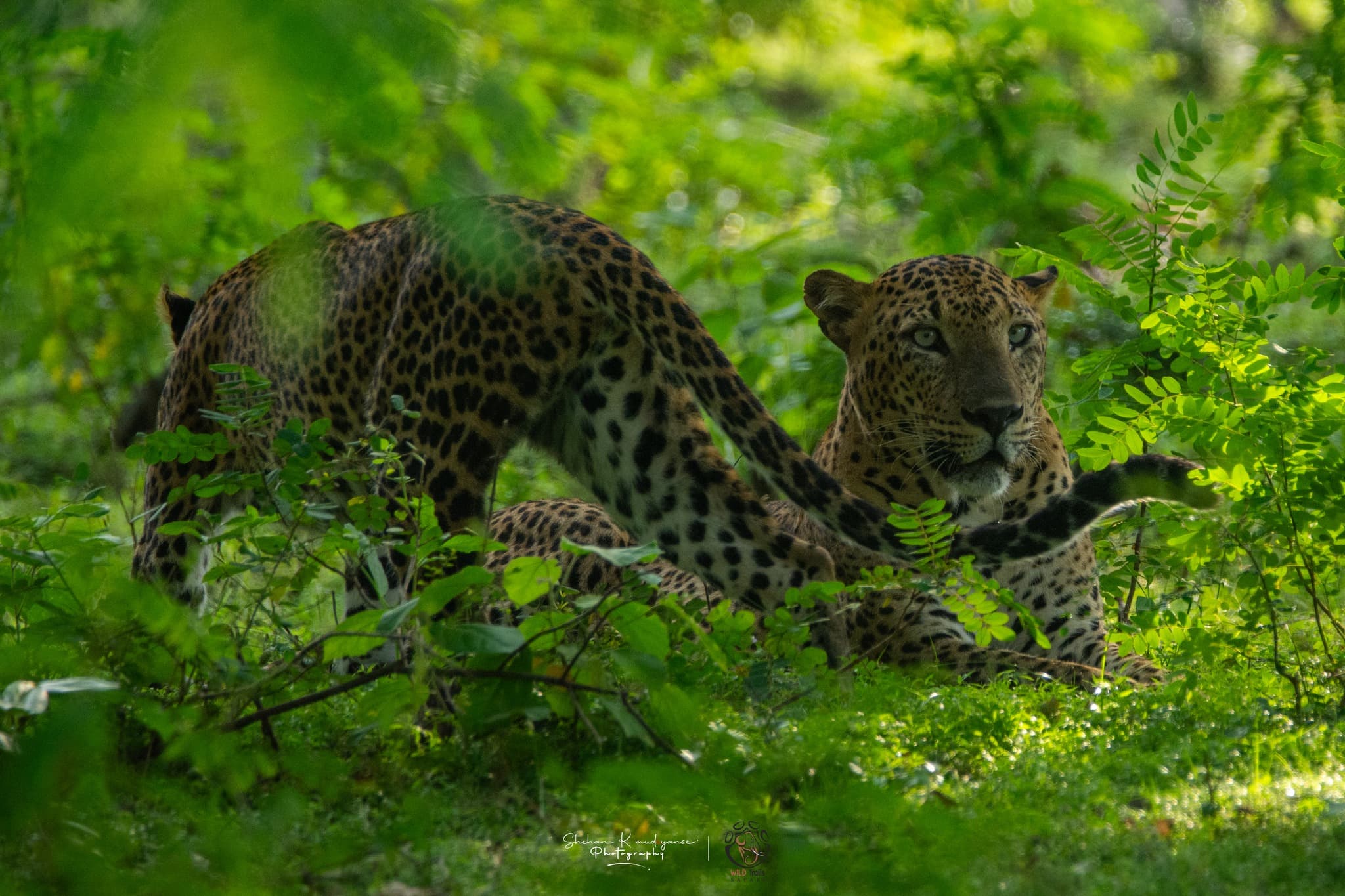
The leopards of Yala Block 1 are also relatively habituated to safari vehicles. They have grown up with jeeps present and no longer associate vehicles with threat. A leopard that would flee at the sight of a human on foot will often sit calmly on a rock while a jeep stops five meters away. This habituation is the single most important factor enabling the close, extended sightings that Yala is famous for.

The Most Important Factor: Your Guide
Before any technique or timing advice, the single most important determinant of whether you see a leopard at Yala is the knowledge and skill of your naturalist guide. This cannot be overstated.
An experienced Yala naturalist guide knows the individual leopards by sight. They know which female has cubs in which rocky territory this season. They know which male has been marking the trees along which section of the Menik River this week. They know that a particular leopard reliably drinks from a specific pool at a specific time of morning during dry season. They can read a deer alarm call and know whether it signals a leopard, a sloth bear, or simply a monitor lizard moving through the grass.
An inexperienced driver following the same tracks will see nothing because they do not know what they are looking for or where to look.
When you book a Yala safari, always ask specifically about guide experience and whether your guide has naturalist training rather than simply a vehicle permit. The difference in your safari outcome will be dramatic.
When to Go: Timing Your Safari for Maximum Leopard Activity
Early Morning is Non-Negotiable
The single most impactful decision you can make about your Yala safari is to enter the park at opening time. The Palatupana gate opens at 6:00 AM, and the first two hours of daylight represent peak leopard activity across Block 1.
Leopards are most active in the hours around dawn because temperatures are cool, prey animals are moving after a night of feeding, and the low-angle morning light that makes leopard spotting easier is at its best. By 9:00 AM the sun begins climbing and leopards start seeking shade and rest. By 10:00 AM many of the morning's active animals have retreated to cover where they will remain invisible for hours.
Guides who enter at 6:00 AM and drive directly to known leopard territories using the flat morning light to scan rocky outcrops and open tracks consistently produce sightings that guides entering at 8:00 AM simply never find.
If your accommodation is in Tissamaharama, arrange a pickup that gets you to the Palatupana gate by 5:45 AM so you are first or among the first jeeps through when the gate opens.

Afternoon Safaris: Golden Hour Opportunities
The afternoon safari entering around 3:00 PM catches a second window of leopard activity as the heat of the midday passes and animals begin moving again toward evening. The golden hour light from 4:30 PM onward is extraordinary for photography, and leopards hunting or moving through open areas in this warm amber light create images that define a safari career.
Afternoon safaris have a slight disadvantage compared to mornings in that the day's earlier jeep traffic has already disturbed some animals. However, the reduced number of jeeps in the late afternoon as some vehicles exit creates calmer conditions around sightings.
The Best Months for Leopard Sightings
February through July represents the dry season window when leopard visibility in Block 1 is at its annual peak. As vegetation dries and thins, the open terrain that makes Yala's leopards visible from jeep tracks becomes even more open. Water sources contract, forcing animals into predictable locations.
April and May are widely considered the single best months. Vegetation is at its most sparse, wildlife concentrates around permanent water sources, and leopard activity peaks. Guides who have worked Block 1 for twenty years consistently point to late April through May as the period of their most extraordinary sightings.
February and March are excellent as the dry season establishes but temperatures have not yet peaked. June and July maintain strong sighting rates with more comfortable conditions.

Where to Look: Key Leopard Locations in Block 1
Experienced naturalist guides do not drive randomly hoping to stumble across a leopard. They work systematically through a mental map of known leopard territories, checking specific locations in a logical sequence based on the time of day, recent sightings, and current weather conditions.
Rocky Outcrops
Leopards use rocky outcrops throughout Block 1 for multiple purposes. They rest on elevated rocks where they can survey their territory and spot approaching prey or rival leopards. They scent-mark rocks and boulders along territorial boundaries. Females with cubs use rock crevices and cave-like features as den sites.
The large rocky formations visible from several Block 1 tracks are the first places experienced guides scan when entering the park in the morning. A leopard resting on a sun-warmed boulder after a cold night is a reliable early morning pattern, and guides who approach these outcrops with binoculars before driving closer can spot resting animals at considerable distance before the animal retreats.
The Menik River Banks
The Menik River corridor is arguably the single most productive leopard territory in Block 1. The permanent water draws prey animals year-round, making it a reliable hunting ground for resident leopards. Several known individuals have established territories centered on specific river sections, and guides familiar with these territories can predict with reasonable accuracy which leopard is likely to be present along which stretch on any given morning.
Leopards drink from the Menik River regularly, and morning safaris that position along the riverbank at dawn often catch animals coming down to water before the heat builds. The combination of riverine vegetation, rocky banks, and open grassland margins makes this corridor extraordinarily diverse for all wildlife, not only leopards.

Open Scrub Tracks at Dawn
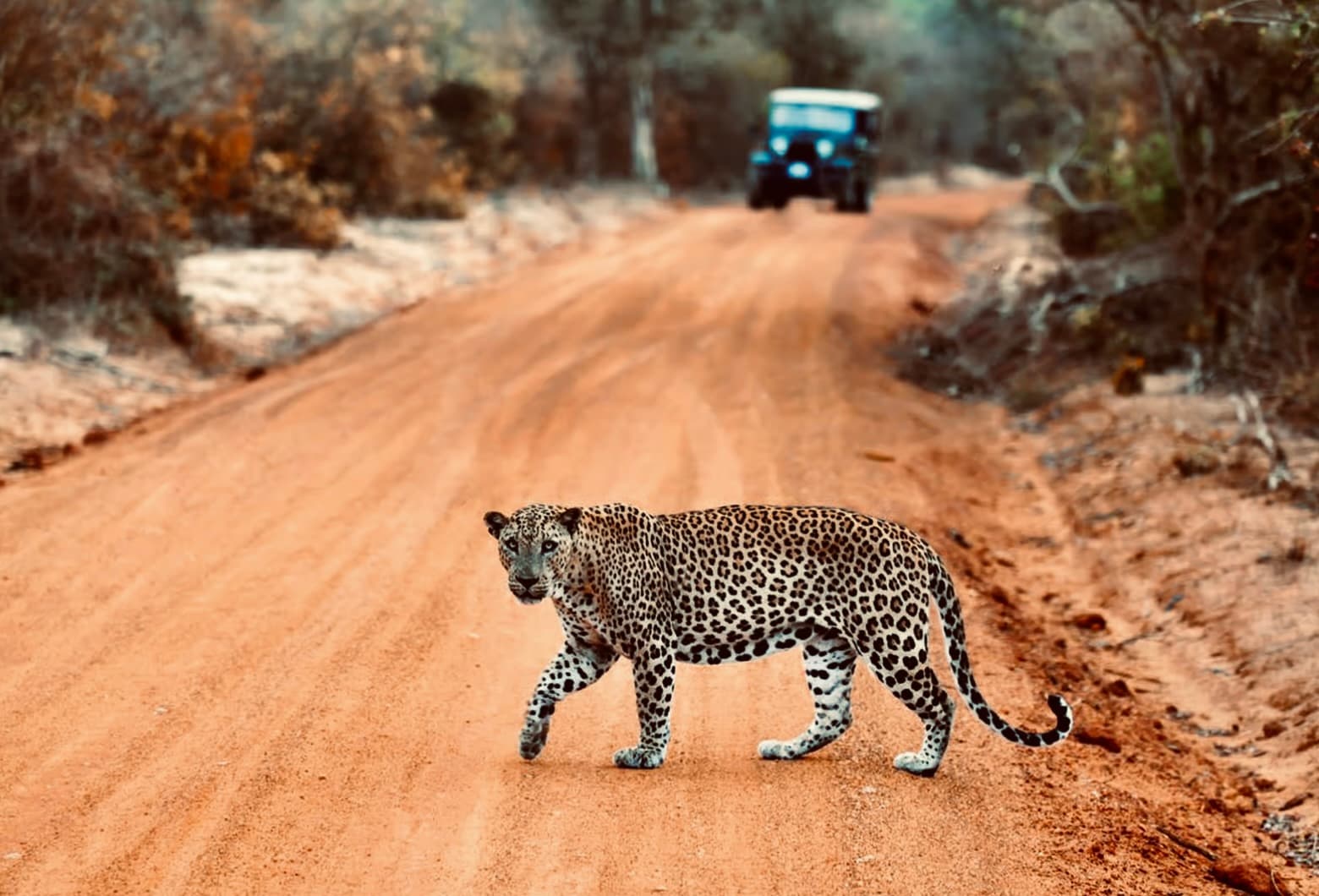
In the very early morning, leopards often move along the open jeep tracks themselves or through the thin scrub immediately adjacent to tracks. They use these open corridors for territorial patrols, and the flat, compressed ground of a track leaves clear pugmarks that alert guides to recent leopard movement.
Guides who drive slowly along track sections in low light, scanning the edges with binoculars and watching for the horizontal silhouette of a cat against the flat ground, regularly spot leopards simply walking through the park in the first thirty minutes after gate opening. This is an encounter that later-arriving jeeps will never experience.
Waterholes and Pools
During the dry season, small permanent waterholes and pools outside the main Menik River become highly productive as the only remaining water in certain areas of Block 1. Leopards visit these pools predictably, particularly in the late afternoon before sunset. Guides who know the locations of these secondary water sources position vehicles downwind and wait quietly rather than driving circles around the park hoping to encounter moving animals.
The patience required for waterhole waiting is something many inexperienced guides lack. A skilled naturalist will switch off the jeep engine, ask passengers to minimize noise and movement, and wait in silence for twenty to thirty minutes. This technique produces significantly better sightings than constant movement.
Reading the Signs: How Guides Find Leopards
Alarm Calls
The most reliable leopard indicator in Block 1 is the alarm call of spotted deer and sambar. When either species detects a predator, they produce distinctive loud barking calls that carry across the scrub jungle. Experienced guides recognize these calls instantly and can often distinguish whether the alarm signals a leopard, a sloth bear, or a less significant disturbance like a monitor lizard.
The direction and movement of alarm calls tells guides where a leopard is and which way it is heading. A guide who hears alarm calls from deer in a particular scrub patch will position the jeep at the point where the leopard is most likely to emerge rather than driving toward the deer, which would push the leopard further into cover.

Pugmarks on Tracks
Leopard pugmarks on dusty or muddy jeep tracks are read by experienced guides the way a navigator reads a map. Fresh pugmarks — those with crisp edges before morning dew has softened them — indicate a leopard passed within the last few hours. The size and depth of prints tell guides whether they are tracking a large male, smaller female, or subadult. The direction and stride pattern indicate whether the animal was walking casually, hunting with short careful steps, or moving at speed.
Guides who begin their morning by examining track surfaces for fresh pugmarks before driving deep into the block can orient their entire morning route around the most recent leopard activity.
Vultures and Crows
Circling or gathered vultures often indicate a kill. Leopards regularly cache kills in trees or dense bush to protect them from jackals and other scavengers. A cluster of birds at a particular tree may mean a leopard is present nearby guarding a carcass, or will return to feed within hours. Guides who notice bird congregation and investigate systematically sometimes discover leopards that would never have been found through track-based searching alone.
Guide Radio Networks
Experienced Block 1 guides maintain informal radio communication networks with other trusted guides. When a leopard is sighted, information passes quickly between vehicles. While this contributes to the jeep congestion problem at popular sightings, it also means that a skilled guide who arrives at an active sighting can position their vehicle intelligently rather than joining the main crowd.
The best guides know which radio contacts are reliable and which produce false alarms, and they use this information selectively rather than chasing every reported sighting.
Behavior to Watch For During a Sighting
Signs a Leopard is Hunting
A leopard in a low crouch with its belly close to the ground, tail held low and still, eyes locked on a direction and moving in slow deliberate steps is actively hunting. This is one of the most exciting behavioral sequences to witness and photograph. Guides who recognize the hunting posture will stop the vehicle silently and cut the engine immediately to avoid disrupting the sequence.

Signs a Leopard is Relaxed
A leopard lying stretched on a rock with eyes half-closed, tail hanging loosely, and no tension in the body is completely relaxed and likely to remain in place for an extended period. This is the classic Block 1 sighting scenario — a habituated leopard resting on a visible rock while jeeps observe from a respectful distance. These sightings can last thirty minutes or more and provide extraordinary photography opportunities.
Signs a Leopard is About to Move
A resting leopard that suddenly lifts its head, fixes its gaze in a particular direction, and begins flicking its tail is about to move. Skilled guides who notice these signs reposition their vehicle anticipating the direction the leopard will walk, placing themselves for a better angle than guides who react only after the animal begins moving.
What Reduces Your Chances of a Leopard Sighting
Understanding what works against a sighting helps you make better decisions about your safari.
Noisy jeeps and passengers push leopards into cover. An experienced guide will ask passengers to reduce voice levels and sudden movements well before approaching known leopard territories. A passenger who slams a camera bag on the metal jeep floor can cause an animal to vanish into the bush in seconds.
Late entry into the park means missing the critical early morning activity window. Guides who enter after 7:30 AM are operating in conditions significantly less productive than those who enter at 6:00 AM.
Inexperienced guides who follow crowds rather than working independent knowledge of leopard territories produce worse results than guides who anticipate movements and position proactively.
Wrong season expectations during the wet season months from August through January, when Block 1 vegetation is dense, require patience and adjusted expectations. Sightings are still possible but require more time and expertise.

Photography Tips for Your Leopard Encounter
When a sighting occurs, having your camera ready and understanding a few basic principles will determine whether you return home with images you are proud of.
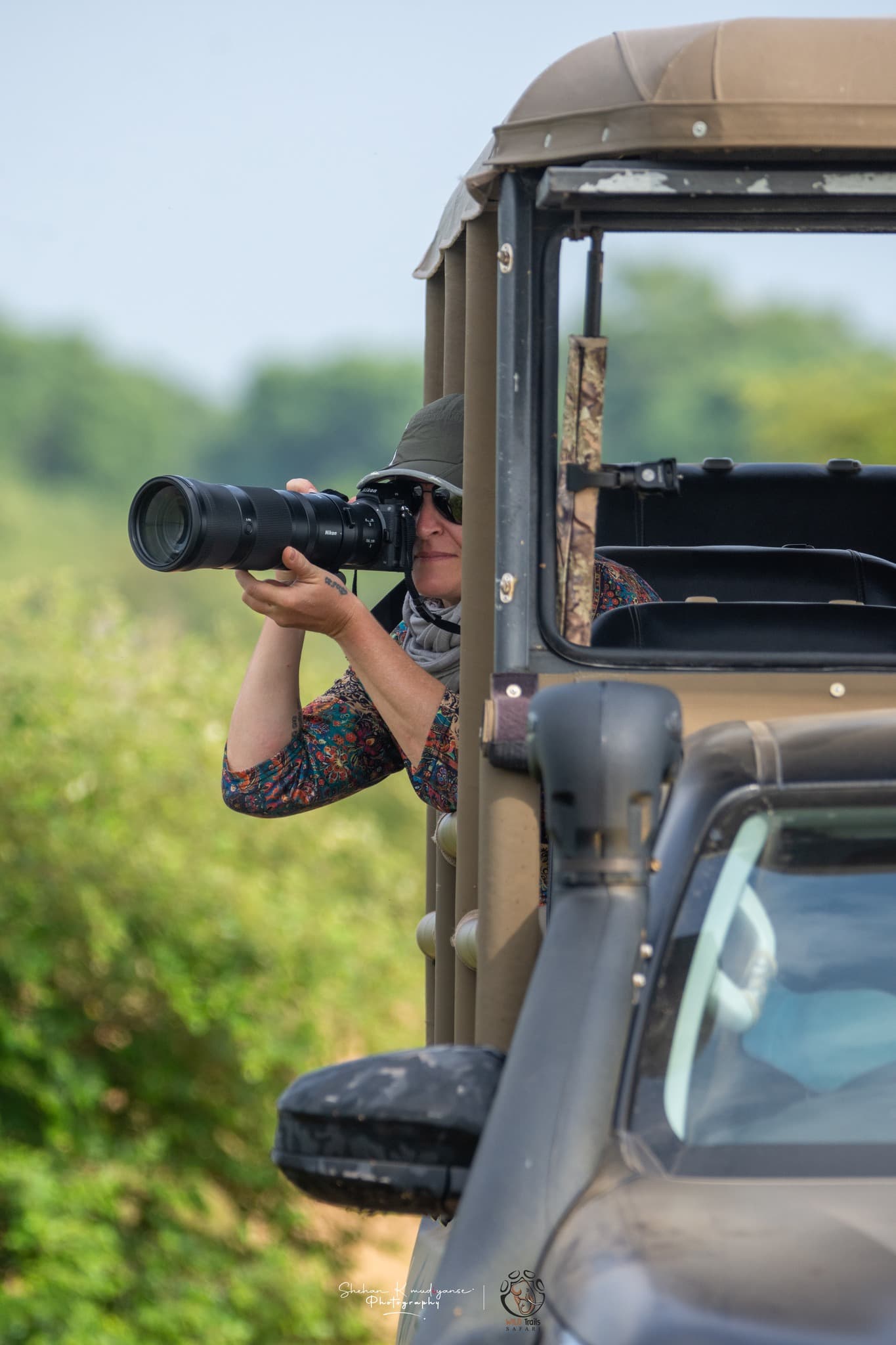
Use the fastest shutter speed your light allows to freeze any movement. Leopards can move from a relaxed position to full speed in a fraction of a second, and a slow shutter will produce blur even on what appeared to be a stationary subject.
Resist the instinct to immediately use the longest zoom setting available. Sometimes a wider shot that includes the rocky habitat or scrub jungle context produces a more powerful image than a tight crop of just the animal's face.
Shoot in the direction of the light rather than against it. A leopard with early morning sun lighting its face against a dark shadowed background is a dramatically better subject than the same animal backlit by a rising sun behind it.
Most importantly, give yourself time to simply observe before raising the camera. Guides who have watched hundreds of guests at leopard sightings consistently report that the guests who look first and photograph second describe the most meaningful experiences. The camera will capture something, but the memory is formed in the moments of direct eye contact.
Book Your Leopard Safari With Our Expert Guides
Everything described in this guide — the territorial knowledge, the alarm call reading, the pugmark tracking, the patient waterhole positioning — is what our naturalist guides do every morning inside Yala National Park Block 1. This knowledge is built over years of daily experience in the field, and it is the difference between a Yala safari that produces multiple leopard encounters and one that returns frustrated.
Our private jeep safaris give you exclusive access to your guide's full attention and the freedom to stop, wait, and position without the compromises that sharing with strangers requires. Every safari we operate is completely private to your group.
To book your Yala leopard safari or ask any questions about timing, blocks, or what to expect, reach out to us directly on WhatsApp at +94 70 557 6915 or visit yalajeepsafaris.com. We will help you choose the right time and block for the best possible chance of the leopard encounter you have been dreaming about.