Yala National Park Wildlife Guide: Every Animal You Can See on Safari
Yala National Park is one of the most biodiverse wildlife sanctuaries in all of Asia. In a single morning safari inside Block 1 you can encounter a leopard resting on a sun-warmed rock, an elephant herd crossing the Menik River, a mugger crocodile basking on an exposed mudbank, a sloth bear foraging through the scrub, and hundreds of bird species at Palatupana Lagoon — all before 10:00 AM. No other park in Sri Lanka, and very few parks anywhere in the world, delivers this concentration and diversity of wildlife in such a compact and accessible area. This complete wildlife guide covers every significant species you can expect to encounter across Block 1 and Block 5/6, along with the best conditions and locations for finding each one.
The Big Five of Yala National Park
Yala does not have Africa's Big Five, but it has its own extraordinary group of headline species that most visitors come specifically to see.
Leopard
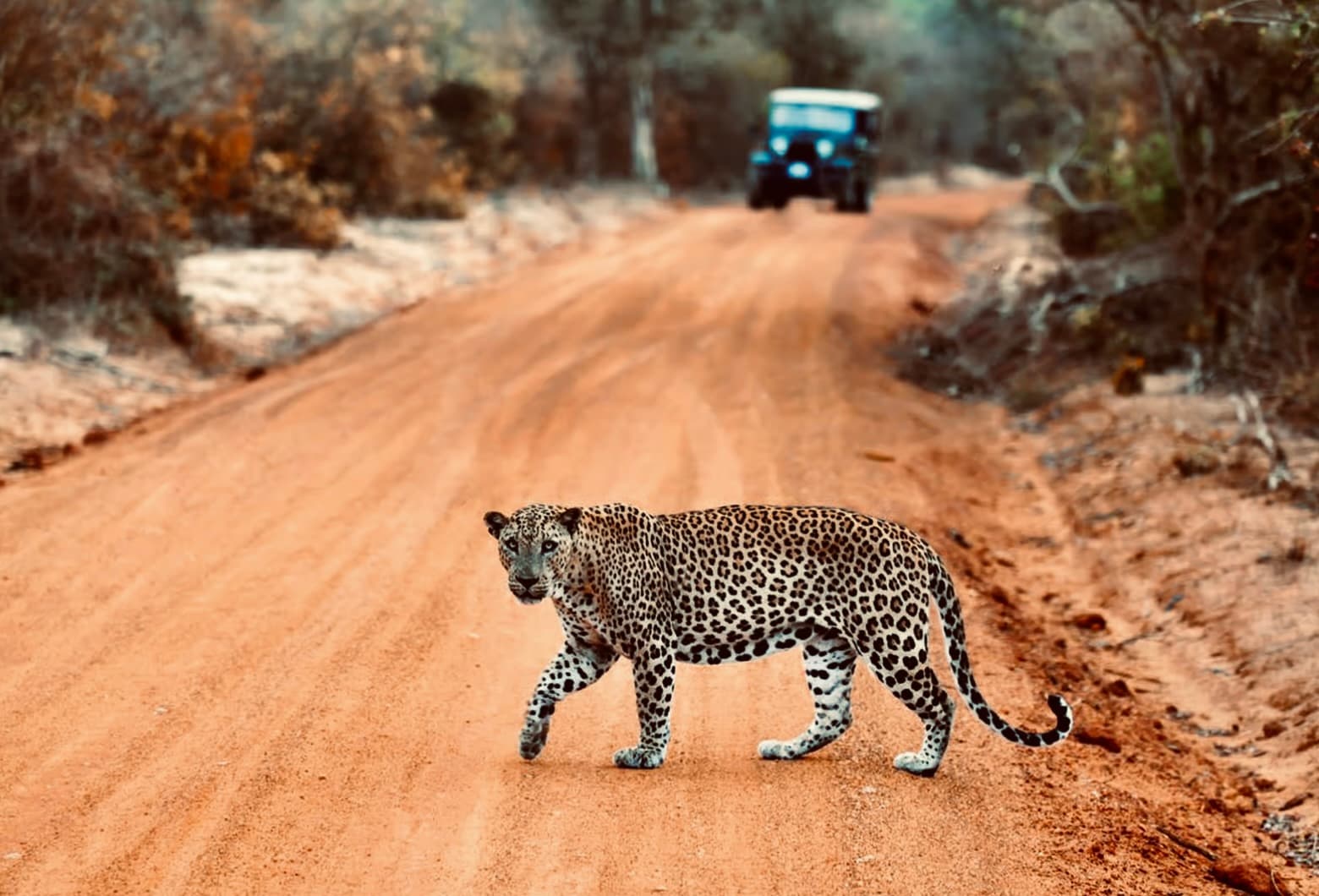
The leopard is Yala's defining animal and the reason the park appears on every serious wildlife traveler's list. Yala National Park holds the highest density of wild leopards of any protected area on Earth — a distinction confirmed by scientific research and validated daily by the guides who work Block 1 year-round.
Sri Lankan leopards are a distinct subspecies called Panthera pardus kotiya, noticeably larger than their African and Indian counterparts. Adult males can weigh over 70 kilograms and measure more than two meters from nose to tail. The subspecies has evolved in relative isolation on the island of Sri Lanka for thousands of years, developing a body size and behavioral profile unique to this ecosystem.
Block 1's leopards are particularly special because decades of protection have made them relatively habituated to safari vehicles. A wild leopard that has never encountered humans will flee immediately at the sight or scent of a vehicle. Yala's Block 1 leopards have grown up with jeeps as a neutral presence in their environment, allowing the close, extended observations that make Yala globally famous.
Individual leopards are identified by their unique rosette patterns — the circular spots on their flanks and back that are as distinctive as human fingerprints. Our naturalist guides know many Block 1 individuals by sight and can often identify which leopard you are looking at, explain their territory, their history, and whether the female you are watching has cubs in a nearby rock den.

Best time to see leopards: February through July during dry season when sparse vegetation and concentrated water sources maximize visibility. April and May are peak months. Morning safaris entering at 6:00 AM give the best encounter probability.
Best location: Block 1 rocky outcrops, Menik River corridor, and open scrub tracks at dawn. Block 5/6 for exclusive, uncrowded encounters at lower probability.
Sri Lankan Elephant
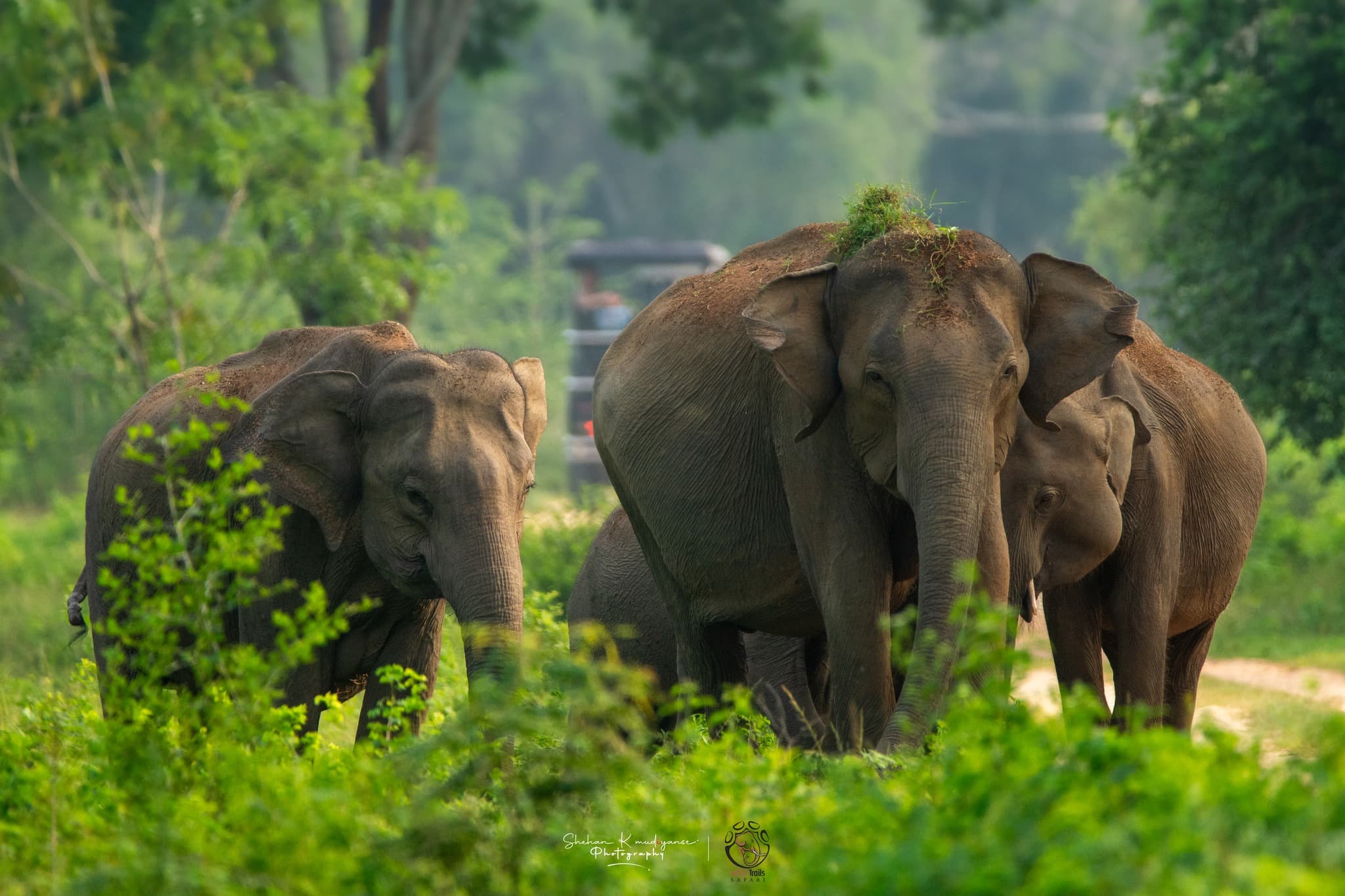
Sri Lankan elephants are the largest land animals on the island and a subspecies of the Asian elephant (Elephas maximus maximus) found only in Sri Lanka. They are larger than their Indian and Sumatran relatives, with proportionally larger heads, more rounded backs, and a higher percentage of tusked males than other Asian elephant populations.
Yala's elephant population moves through both Block 1 and Block 5/6 in family herds typically consisting of a matriarch, her daughters, and their calves. Bachelor males roam independently or in small groups, occasionally joining herds when females are in estrus. Encounters with large solitary bulls require careful attention from guides — a bull in musth (a hormonal state associated with elevated testosterone) can be unpredictable and aggressive toward vehicles.
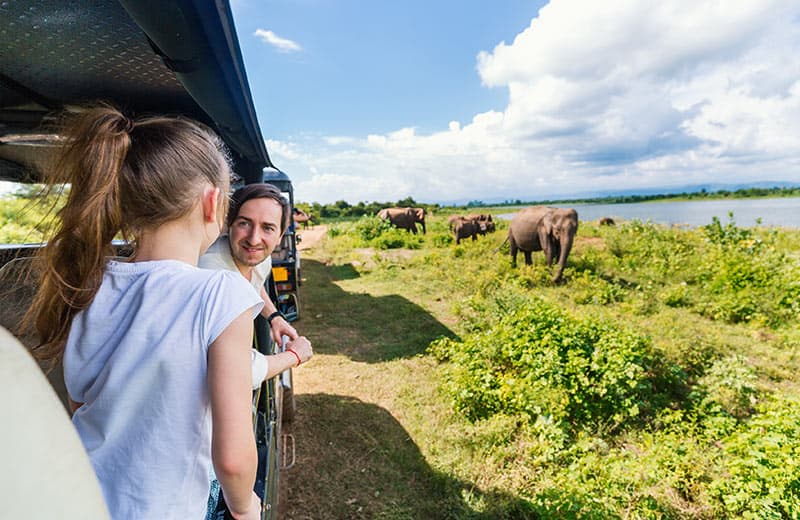
Elephant herds at Yala are frequently encountered near the Menik River where they drink and bathe, in open grassland areas where fresh grass growth attracts feeding, and at smaller waterholes throughout Block 1 during dry season months. Calves — particularly young ones only a few months old — are among the most endearing wildlife encounters in the park, and seeing a calf learning to use its trunk or playing near its mother creates memories that guests describe for years afterward.

Best time to see elephants: Year-round throughout both blocks. Dry season concentrates herds near permanent water sources making encounters more predictable. Morning safaris catch herds active in open areas before midday heat drives them to shade.
Best location: Menik River banks, open grassland areas throughout Block 1, and undisturbed forest patches in Block 5/6 where herds behave particularly naturally.
Sloth Bear
The sloth bear (Melursus ursinus inornatus) is perhaps the most exciting Yala encounter after the leopard — primarily because most visitors do not expect to see a bear in Sri Lanka and are completely unprepared for the encounter when it happens. Sri Lanka's sloth bears are a distinct subspecies found nowhere else on Earth, and Yala's Block 1 supports a healthy population.
Sloth bears are medium-sized, heavily built animals covered in shaggy black fur with a distinctive cream-colored V or Y marking on their chest. They have long curved claws designed for digging into termite mounds and a specially adapted lower lip that can be extended into a tube for vacuuming termites and honey. Despite their somewhat comical feeding behavior, sloth bears are genuinely dangerous animals. They are responsible for more human fatalities in South Asia than leopards or tigers, and guides maintain careful vehicle distances during encounters.
Yala's sloth bears are primarily nocturnal but are regularly encountered in the early morning and late afternoon in Block 1. They are most frequently seen in rocky terrain and woodland areas where termite mounds are abundant, and along the edges of scrub jungle where fig trees and other fruit sources attract them during fruiting seasons.

Best time to see sloth bears: Early morning during the first two hours after gate opening, and late afternoon from 4:00 PM onward. Dry season months offer better visibility in sparse vegetation.
Best location: Rocky terrain and woodland edges throughout Block 1. Block 5/6 for undisturbed encounters with less vehicle pressure.
Mugger Crocodile
The mugger or marsh crocodile (Crocodylus palustris) is the dominant reptile of Yala's wetlands and river systems. These large freshwater crocodiles — adults reaching four to five meters in length — are year-round residents of the Menik River, Palatupana Lagoon, and smaller permanent water bodies throughout Block 1.
Mugger crocodiles are classic baskers. During dry season months when water temperature rises, they emerge from the water and lie motionless on exposed mudbanks and rocks for hours, their mouths sometimes open in a behavior called gaping that helps regulate body temperature. A large mugger lying on a mudbank with its mouth open, surrounded by birds perched on its back, is one of Block 1's most reliably encountered and most photographed scenes.
Do not be deceived by their apparent stillness. Mugger crocodiles can move with explosive speed when motivated, and guides maintain vehicle distances that respect the animals' space. Encounters with crocodiles in or near water require particular attention, as their aquatic speed far exceeds their land movement.

Best time to see mugger crocodiles: Year-round. Dry season basking is most spectacular when low water levels expose maximum mudbank area. Early morning basking sessions are reliably productive at Menik River locations.
Best location: Menik River banks throughout Block 1, Palatupana Lagoon margins, and any permanent waterholes visible from Block 1 tracks.
Water Buffalo
The Sri Lankan wild buffalo (Bubalus bubalis migona) is one of Yala's most impressive large mammals and one that visitors consistently underestimate in terms of spectacle. Large herds of twenty to forty animals moving through open grassland, the bulls' massive curved horns sweeping back dramatically, create scenes of raw power that rival any African safari experience.
Wild buffalo are significantly larger and more powerfully built than domestic cattle. Dominant bulls can weigh over 800 kilograms and carry horn spreads exceeding a meter. They are genuinely dangerous animals with a reputation for unpredictability, and guides who encounter buffalo on jeep tracks behave cautiously, turning off engines and waiting for herds to move of their own accord.
Buffalo herds in Yala are found most frequently in open grassland areas and around wetlands where they wallow in mud to cool themselves and remove parasites. The muddy, wallowed appearance of a large buffalo bull covered in dried mud with cattle egrets perched on its back is one of Block 1's most characterful sights.

Best time to see water buffalo: Year-round throughout Block 1. Morning and late afternoon when herds are active in open areas. Wet season brings larger concentrations in grassland areas stimulated by fresh growth.
Best location: Open grasslands throughout Block 1, wetland margins, and scrub areas between forest patches.
Deer and Smaller Mammals
Spotted Deer
The spotted deer or chital (Axis axis ceylonensis) is the most abundant large mammal in Yala and the primary prey species for leopards. You will encounter spotted deer on virtually every safari — sometimes in herds of over a hundred animals grazing in open grassland in the early morning light. Their elegant spotted coats, delicate builds, and alert behavior make them beautiful photographic subjects in their own right.
The relationship between spotted deer and leopards is one of the most fascinating dynamics to observe on a Yala safari. The deer's alarm bark — a sharp, explosive call that carries across the scrub — is one of the most reliable indicators of nearby leopard presence. Experienced guides read the direction and urgency of deer alarm calls to track leopard movements across areas they cannot directly see.
Male spotted deer carry elegant, lyre-shaped antlers that are shed and regrown annually. During rutting season the males become highly aggressive, antler-sparring frequently and producing distinctive bellowing calls that fill the forest edges.

Sambar Deer
The sambar deer (Rusa unicolor unicolor) is Asia's largest deer species and a dramatically different animal from the delicate chital. Adult sambar stags stand over 150 centimeters at the shoulder and can weigh over 200 kilograms, with coarse dark brown coats and heavy, three-tined antlers. They are solitary or found in small groups, and their preference for dense forest margins makes them less frequently seen than chital despite their larger size.
Sambar are the preferred prey of large male leopards due to their size, and a leopard kill site involving a sambar represents a major hunting success. Guides who find fresh sambar kills can predict with confidence that a leopard will return to feed, and setting up quietly near an active kill often produces extended, unhurried leopard observations.
Indian Jackal
The Indian jackal (Canis aureus) is Yala's most common carnivore and one of the most frequently seen animals on any safari. Jackals are highly adaptable, highly intelligent, and genuinely entertaining to observe. They are active at any hour, scavenge opportunistically around kills and carcasses, and can often be seen following leopards at a distance waiting for scraps from a successful hunt.
Jackal pairs mate for life and are often encountered together, trotting along jeep tracks or investigating interesting smells with characteristic quick, alert movements. Their calls — particularly the rising group howl at dawn and dusk — are one of Yala's most atmospheric sounds.

Water Monitor Lizard
The water monitor (Varanus salvator) is the largest lizard species in Yala and one of the world's largest lizards overall, with adults regularly exceeding two meters in length. They are semi-aquatic, swimming powerfully across the Menik River and lagoons, and are found wherever water is present throughout Block 1.
Water monitors are opportunistic predators and scavengers eating fish, frogs, bird eggs, smaller reptiles, and carrion. They are frequently found near crocodile basking sites where they compete for scraps, and around nesting bird colonies where they raid eggs. Despite their impressive size, monitors are shy and will plunge into the nearest water body when approached too closely.
Bird Life: Over 200 Species Across Block 1 and Block 5/6
Yala National Park is one of Sri Lanka's premier birdwatching destinations, with over 200 recorded species across the park's diverse habitats. The combination of coastal lagoons, scrub jungle, open grassland, and rocky terrain creates an extraordinary variety of bird communities within a single safari area.
Palatupana Lagoon: Sri Lanka's Finest Bird Spectacle
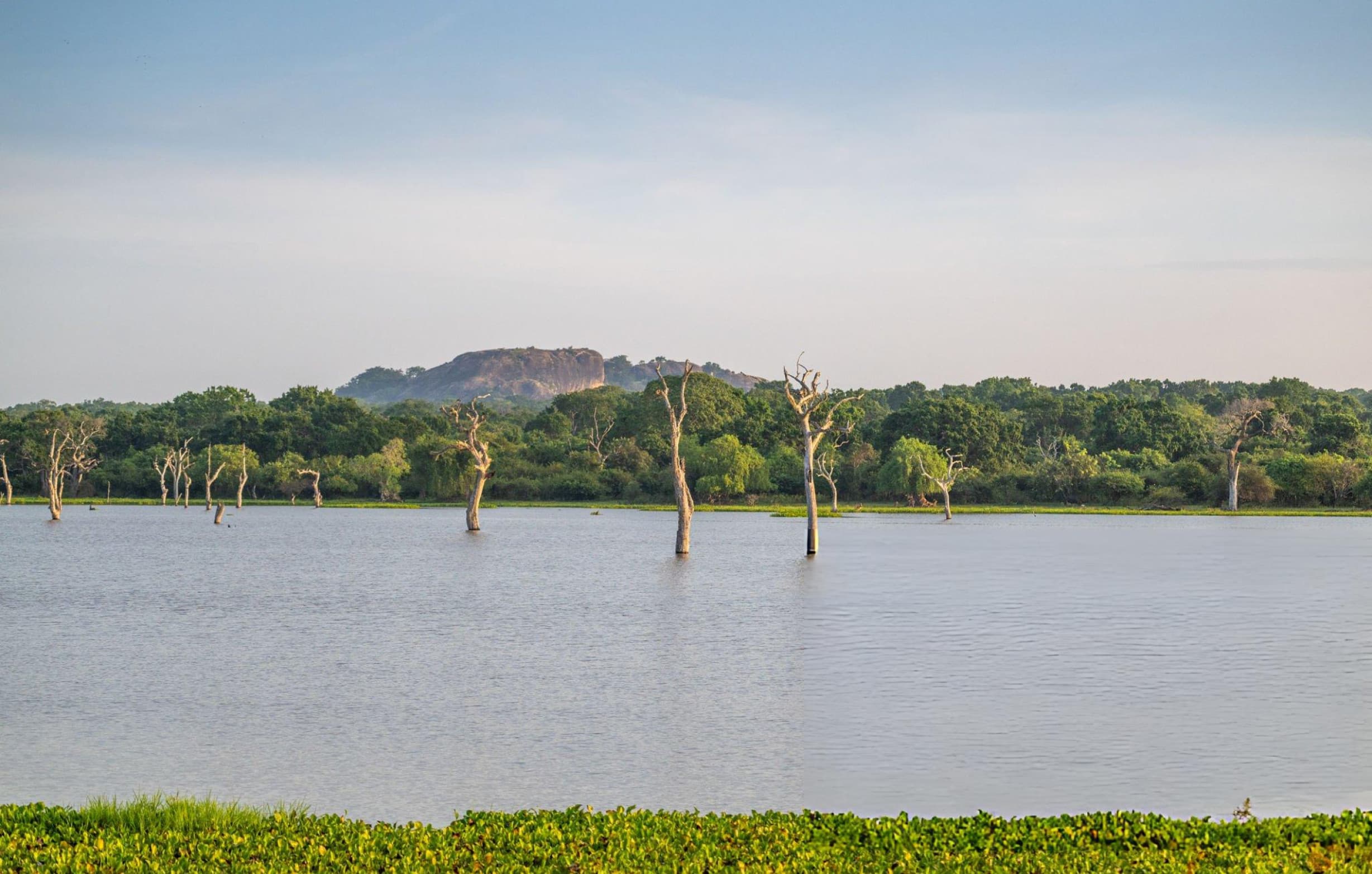
Palatupana Lagoon at the southern boundary of Block 1 is in a different category from any other birdwatching location in Sri Lanka. During the migratory season from November through February, this shallow coastal lagoon attracts birds in numbers that feel genuinely overwhelming.
Lesser flamingos gather here in flocks of several hundred during peak season, their pink-tinged plumage reflecting in the still lagoon water against a dawn sky. Painted storks stand in the shallows, their distinctive orange-red facial skin and white-and-black patterned wings making them unmistakable. Eurasian spoonbills sweep their spatulate bills through the water in characteristic side-to-side feeding movements. Black-headed ibis probe the mud with curved bills. Yellow-billed storks and Asian openbills wade through deeper water. The diversity and density of waterbirds at Palatupana during peak season is genuinely world-class.

Endemic Sri Lankan Bird Species
Yala is one of the best places in Sri Lanka to observe several endemic bird species that exist nowhere else on Earth.
The Sri Lanka junglefowl (Gallus lafayettii) is Sri Lanka's national bird and one of the most strikingly beautiful birds in the park. Males carry brilliant orange-red plumage with metallic green tail feathers and a distinctive red and yellow facial wattle. They are commonly encountered in forest edges and scrub throughout both Block 1 and Block 5/6, typically in the early morning before the heat drives them to shade.
The Sri Lanka grey hornbill (Ocyceros gingalensis) is a medium-sized hornbill endemic to Sri Lanka, commonly seen in pairs moving through forest patches in Block 1. Their calls — a series of loud cackling notes — are one of the characteristic sounds of a Yala morning drive.
The red-faced malkoha (Phaenicophaeus pyrrhocephalus) is one of Sri Lanka's most sought-after endemic species. This large, striking cuckoo-relative with a brilliant red facial skin and long graduated tail is found in forest patches throughout Block 1 and is more commonly encountered in Yala than in most other parks due to the presence of suitable habitat.
Birds of Prey
Yala hosts an impressive array of raptors that are frequently encountered soaring above the open scrubland or perched on prominent dead trees surveying their territories.
The crested serpent eagle (Spilornis cheela) is perhaps the most commonly encountered raptor in Yala. Its distinctive loud whistling call is heard constantly throughout Block 1, and the bird's bold black-and-white crest and brown-barred underparts make it unmistakable. True to its name, it hunts snakes extensively, hovering over grassland and scrub before diving to capture reptiles.
The white-bellied sea eagle (Icthyophaga leucogaster) is a large, powerful raptor that patrols the Palatupana Lagoon and Menik River corridor hunting fish and waterbirds. Its striking white head and underparts contrast with grey-brown upperparts, and its broad wingspan of over two meters makes it an impressive sight when soaring over the lagoon.
The changeable hawk-eagle (Nisaetus cirrhatus) and black eagle (Ictinaetus malaiensis) are both encountered regularly in Yala's forest patches, while the oriental honey buzzard and multiple falcon species are seen over open scrubland.

Common Birds You Will See on Every Safari
Even visitors with no particular interest in birdwatching will notice many species throughout a Block 1 morning drive.
Indian peafowl are abundant throughout Yala, and males displaying their extraordinary tail fans in the early morning are a reliable and spectacular sight. Indian roller birds perch conspicuously on scrub tops, their brilliant turquoise-and-chestnut plumage making them one of the most photographed small birds in the park. Green bee-eaters hawk insects from low perches along track margins. Pied kingfishers hover over the Menik River before plunging for fish. Lesser adjutant storks wade methodically through lagoon shallows. Asian paradise flycatcher males trail their extraordinary long white tail ribbons through forest patches.
Reptiles Beyond Crocodiles
Indian Cobra and Russell's Viper
Yala supports healthy populations of both the Indian cobra (Naja naja) and Russell's viper (Daboia russelii), two of Sri Lanka's most medically significant snake species. Both are encountered regularly on Block 1 tracks, particularly during morning hours when they bask on warm track surfaces. Guides who spot snakes on tracks will stop the vehicle at a safe distance and wait for the snake to move of its own accord before proceeding.
Indian Star Tortoise
The Indian star tortoise (Geochelone elegans) is one of Yala's most charming encounters. These medium-sized tortoises with spectacular star-patterned shells are found throughout Block 1 in open scrubland and grassland areas. They are entirely harmless and often allow close observation, moving slowly through the vegetation on their daily grazing and basking routines.

Land Monitor
The land monitor or Bengal monitor (Varanus bengalensis) is a smaller relative of the water monitor, found in drier scrub areas away from water throughout Block 1. They are commonly seen basking on rocks and termite mounds and are frequently confused with water monitors by first-time visitors — the key distinguishing features are the land monitor's shorter, more pointed snout and preference for dry habitats away from water.
Seasonal Wildlife Variations
Dry Season Wildlife (February to July)
Dry season concentrates wildlife around permanent water sources, creating predictable encounter patterns that experienced guides exploit systematically. Leopards are most visible with maximum frequency around Menik River territories. Elephant herds gather near the river and permanent pools. Crocodile basking reaches peak levels. Spotted and sambar deer concentrate in areas with remaining green vegetation. This is the season of classic Yala wildlife photography — warm golden light, sparse vegetation, and animals in concentrated, predictable locations.
Wet Season Wildlife (August to January)
Wet season disperses wildlife more widely as water becomes available throughout the park. Leopard sightings are lower probability but still occur regularly with experienced guides. Elephant herds in Block 5/6 are particularly spectacular during wet season months as the lush vegetation supports large family groups. Palatupana Lagoon reaches its peak bird diversity with migratory species present. The green landscape feels dramatically alive, and the reduced tourist numbers create a more intimate wildlife experience.

Wildlife You Might Be Lucky to See
Some Yala species are present but rarely encountered, making a sighting genuinely special.
Fishing cat (Prionailurus viverrinus) is a medium-sized wild cat that hunts fish and frogs along water margins. Significantly smaller than a leopard but with similar spotted patterning, fishing cats are occasionally encountered near the Menik River and lagoon margins in Block 1. A fishing cat sighting is considered exceptional even by experienced Yala guides.
Rusty-spotted cat (Prionailurus rubiginosus) is the world's smallest wild cat species and one of the most rarely seen mammals in Yala. Nocturnal and extremely secretive, rusty-spotted cats are occasionally seen on night drives or in the very early morning at the park boundary. A confirmed sighting is a once-in-many-visits event.
Stripe-necked mongoose and Indian grey mongoose are both found in Yala and occasionally seen on daylight drives, but their secretive habits and small size make encounters unpredictable.
Experience Yala's Wildlife With Our Expert Naturalist Guides
Understanding the diversity and distribution of Yala's wildlife is the first step. Actually finding and observing these animals in the field requires the intimate knowledge of a naturalist guide who has spent years learning individual animals, seasonal patterns, and the subtle signs that lead to extraordinary encounters.
Our certified naturalist guides at Yala Jeep Safaris know the individual leopards of Block 1 by their rosette patterns. They know which elephant matriarch leads which family herd and where that family will be feeding on a cool February morning. They know the termite mounds where sloth bears forage before dawn and the Menik River pools where mugger crocodiles gather when water levels drop in April.
Every safari we operate is completely private to your group. Your guide's full attention is on finding the best possible wildlife for you, without the compromises that come from sharing a vehicle with strangers.
To book your private wildlife safari across Block 1 or Block 5/6 at Yala National Park, contact us on WhatsApp at +94 70 557 6915 or visit yalajeepsafaris.com. We will match your dates, interests, and wildlife priorities to the right safari option and give you the best possible chance of experiencing everything Yala has to offer.