Yala Block 1 vs Block 5/6: Which Safari Zone Should You Choose?
Every traveler planning a Yala safari eventually faces the same question: should I go into Block 1 or Block 5/6? It is one of the most common questions we receive at Yala Jeep Safaris, and it deserves a genuinely detailed answer rather than a vague recommendation. The truth is that Block 1 and Block 5/6 are meaningfully different experiences - different terrain, different wildlife density, different atmosphere, and different advantages depending on what you are looking for. This guide explains everything you need to know to make the right choice for your visit to Yala National Park.
What Are Yala's Safari Blocks?
Yala National Park is divided into five blocks, but only two are currently open for regular tourist safaris: Block 1 and Block 5/6 (Blocks 5 and 6 are administered together and accessed via the same route). The remaining blocks are either closed to tourism or restricted to research access.
Block 1 is the original and most famous safari zone, covering approximately 14,100 hectares of the park's southwestern corner. It contains the Palatupana entrance gate, the Menik River, extensive coastal lagoons including Palatupana Lagoon, open scrub jungle, and the rocky outcrops that Yala's leopards use as territorial markers and resting sites. Block 1 is the zone that established Yala's global reputation for leopard encounters.
Block 5/6 lies to the northeast of Block 1, covering a significantly larger area of wilderness. It is accessed via a separate route and operates with a fraction of the jeep traffic that passes through Block 1. The terrain is different - denser in some areas, more diverse in others - and the overall atmosphere is dramatically quieter and more remote.

Yala Block 1: The World's Premier Leopard Tracking Zone
Block 1 is the reason Yala National Park appears on every serious wildlife photographer's bucket list. It holds the highest density of wild leopards of any protected area on Earth - a fact confirmed by multiple scientific studies and consistently validated by the experience of naturalist guides who have worked the block for decades.
What Makes Block 1 Special
The combination of habitat diversity within a relatively compact area is what makes Block 1 so extraordinarily productive for wildlife encounters. Within a single morning safari you can move from open coastal lagoons where flamingos wade and crocodiles bask, through dense scrub jungle corridors where leopards hunt, across rocky outcrops where individuals rest and mark territory, and into open grassland where elephant herds feed at dawn.
The Menik River running through Block 1 is the single most important wildlife feature in the entire park. It provides permanent water regardless of season, which means leopards, elephants, sloth bears, and crocodiles all return to predictable locations along its banks. Experienced naturalist guides know the stretches of the Menik River where specific individual leopards drink, the rocks where they rest after feeding, and the crossing points they use when moving between territories.
Palatupana Lagoon at the southern boundary of Block 1 is one of Sri Lanka's finest birdwatching locations. During the migratory season from November through February, lesser flamingos gather here in their hundreds alongside painted storks, spoonbills, crested serpent eagles, and dozens of other species. The lagoon backdrop against the early morning sky creates some of the most spectacular photography conditions in all of South Asia.

Block 1 Wildlife You Can Expect to See
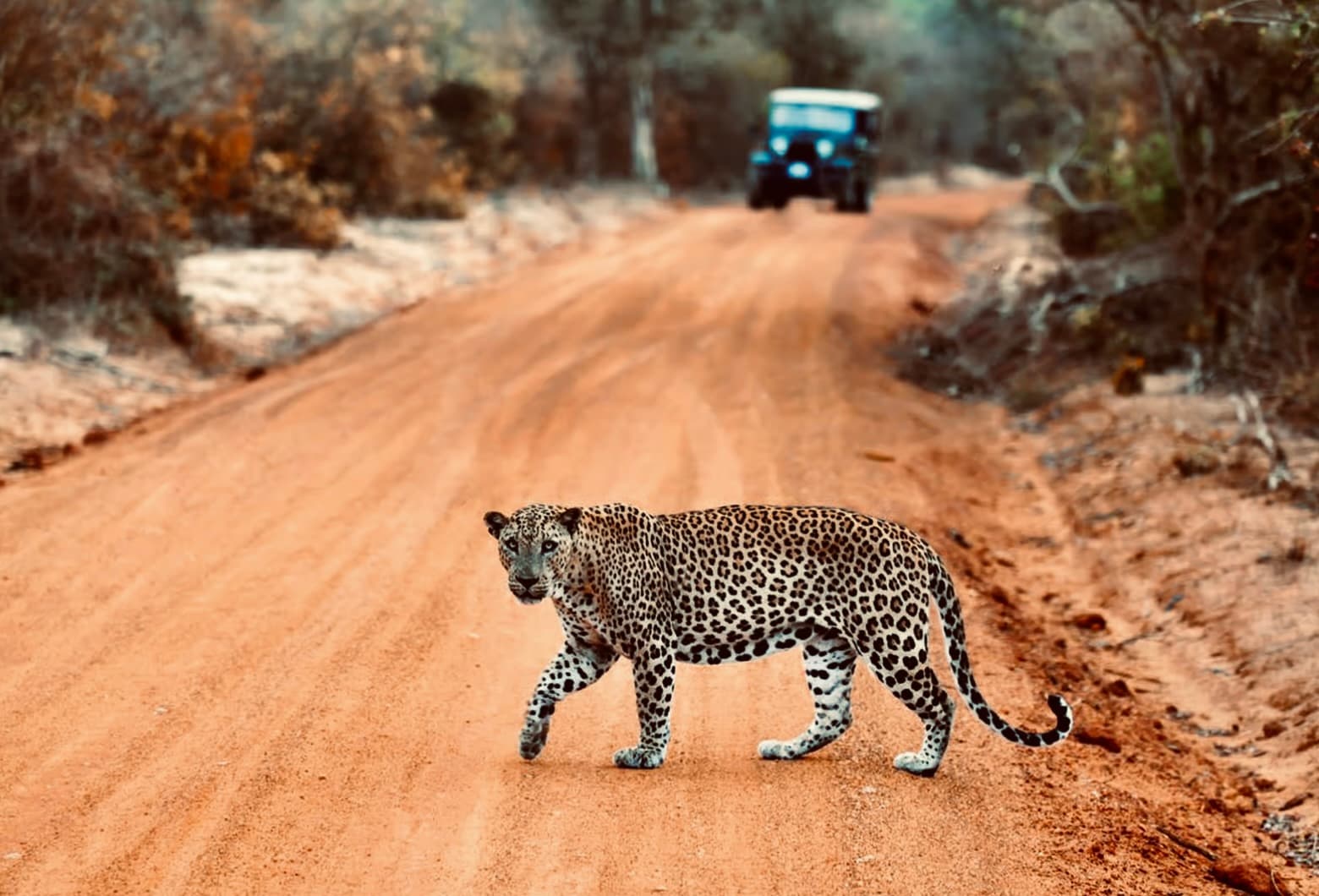
Leopards are the headline attraction and the primary reason most visitors choose Block 1. The density of individuals means that experienced naturalist guides can locate known leopards reliably during peak dry season months from February through July. On a typical morning safari during April or May, multiple leopard sightings in a single drive are not unusual. Even during the wet season when vegetation is denser, patient guides who know individual territories can produce encounters that would be impossible in other parks.
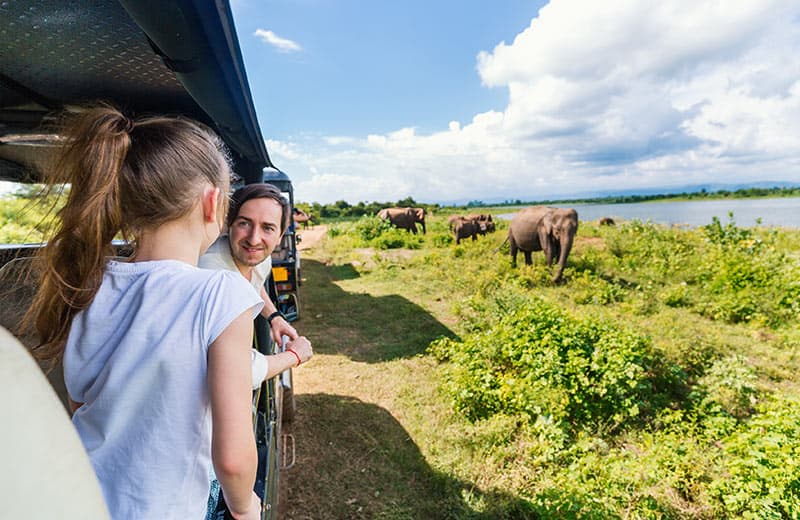
Sri Lankan elephants move through Block 1 regularly, with herds of ten to forty individuals commonly encountered near the Menik River and open grassland areas. Unlike parks where elephants are the primary draw, Yala's elephants are almost a secondary species - impressive and always exciting to see, but often overshadowed by the leopard encounters that dominate most guests' memories.
Sloth bears are one of Block 1's most sought-after sightings after leopards. These elusive animals are far harder to find than leopards but encountered regularly enough that dedicated early morning drives produce sightings several times per week during good conditions. The rocky scrubland of Block 1 provides ideal sloth bear habitat.
Mugger crocodiles bask extensively along the Menik River and around the coastal lagoons, particularly during dry season months when exposed mudbanks provide sunbathing spots. Block 1 has a healthy crocodile population that is easily observed from jeep tracks running along the river.
Bird species number over 200 across the park, with Block 1's diversity of habitats - lagoon, scrub jungle, open grassland, rocky terrain - producing exceptional variety. Endemics including the Sri Lanka junglefowl, Sri Lanka grey hornbill, and red-faced malkoha are regularly encountered in the block's forest patches.
The Challenge of Block 1
The primary challenge of Block 1 is jeep congestion at popular sighting locations. When a leopard is spotted, radio communication spreads the news and multiple jeeps converge rapidly. During peak season, ten to twenty jeeps surrounding a single leopard sighting is not uncommon. This can feel chaotic and reduce the intimacy of the encounter, though experienced guides position their vehicles at the edges of crowds for better angles and less disturbance to the animal.
During the wet season months of August through January, vegetation in Block 1 becomes considerably denser, significantly reducing visibility for leopard sightings. What was open scrubland in April becomes dense bush by October, and leopards that were easily spotted from jeep tracks become almost invisible. This seasonal vegetation change is the biggest factor to consider when timing your Block 1 safari.

Yala Block 5/6: The Exclusive Wilderness Alternative
Block 5/6 is Yala's best-kept secret. While Block 1 attracts the overwhelming majority of safari visitors, Block 5/6 operates with dramatically fewer jeeps - sometimes as few as three or four vehicles in an area that dwarfs Block 1 in size. This creates a genuinely exclusive wilderness experience that many serious wildlife travelers prefer.
What Makes Block 5/6 Different
The first thing you notice entering Block 5/6 is the silence. Without the constant radio chatter and convoy of jeeps that characterizes popular Block 1 sighting locations, the safari feels private, unhurried, and deeply immersive. Animals behave more naturally when fewer vehicles are present. Leopards do not melt into the bush when a single quiet jeep approaches, and elephants do not trumpet nervously at vehicle congestion.
The terrain of Block 5/6 differs meaningfully from Block 1. While Block 1 is characterized by open coastal terrain with lagoons and rocky outcrops, Block 5/6 has denser forest patches, different scrub jungle composition, and a landscape that feels wilder and less trafficked. This different habitat supports slightly different wildlife communities, and some species that are rarely seen in Block 1 appear more frequently in Block 5/6's denser vegetation.
Water sources in Block 5/6 are distributed differently from Block 1's Menik River corridor. Several smaller water bodies and seasonal streams support wildlife movement across a broader area, making the safari experience more exploratory. Your guide is tracking and searching rather than driving toward known sighting locations, which creates a more authentic wilderness feeling.

Block 5/6 Wildlife
Leopards are present in Block 5/6 but at lower density than Block 1. Sightings are possible and occur regularly, but the probability per safari is lower than in Block 1 during dry season conditions. However, when a leopard is found in Block 5/6, the encounter is completely different. Your jeep is alone with the animal in silence, with no competing vehicles, no radio noise, and no time pressure to move on. Many experienced wildlife travelers consider a solitary Block 5/6 leopard encounter more memorable than the crowd-surrounded Block 1 sighting.
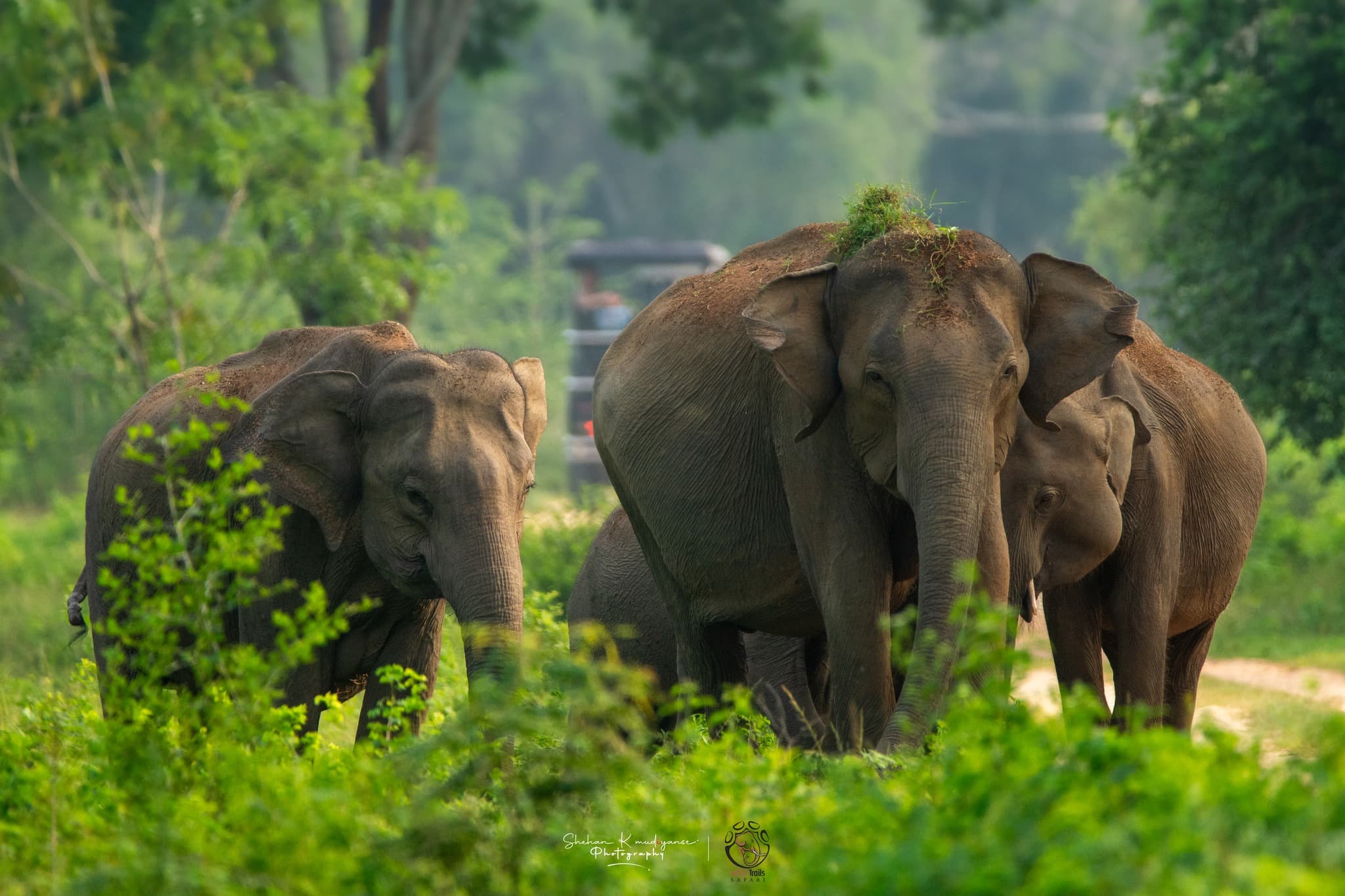
Elephants are regularly encountered in Block 5/6, often in larger undisturbed herds than in Block 1. The reduced jeep traffic means herds behave more naturally, allowing extended observation of social behavior, calf activity, and herd dynamics without the stress responses that vehicle congestion can trigger.
Sloth bears and other naturally shy species may actually move more freely through open areas in Block 5/6 due to the reduced human disturbance, creating encounters with animals that are behaving exactly as they would if no people were present.
Bird diversity in Block 5/6 benefits from the denser forest habitat, with woodland species appearing that are less common in Block 1's more open terrain. The different plant community supports different insect populations that in turn attract different bird species, giving birdwatchers good reason to explore this less-visited zone.
The Challenge of Block 5/6
The honest limitation of Block 5/6 is lower leopard encounter probability compared to Block 1 during the dry season. If your primary goal is maximizing the chance of seeing a leopard and you are visiting during February through July, Block 1 is the statistically stronger choice. Block 5/6 rewards patience and the willingness to experience the safari as a broader wilderness encounter rather than a leopard-targeting exercise.
Guide knowledge matters more in Block 5/6 than in Block 1. In Block 1, radio networks spread leopard sighting information between guides quickly. In Block 5/6, finding wildlife depends almost entirely on your guide's personal knowledge of the terrain and animal movement patterns. Choosing an experienced naturalist guide makes a particularly significant difference to your Block 5/6 encounter rates.

Block 1 vs Block 5/6: Direct Comparison
Leopard probability during dry season (February to July) Block 1 delivers very high leopard encounter probability with dense populations in a well-known territory. Block 5/6 offers moderate probability depending heavily on guide expertise and animal movement.
Leopard probability during wet season (August to January) Block 1 drops to moderate probability as vegetation thickens. Block 5/6 maintains low to moderate probability with the advantage that fewer jeeps create less animal disturbance.
Jeep congestion Block 1 can become genuinely congested at popular sighting points during peak season. Block 5/6 is consistently uncrowded with sometimes only two or three jeeps operating in a vast area.
Wilderness atmosphere Block 1 feels managed and trafficked during peak season. Block 5/6 feels genuinely wild and remote year-round.
Elephant encounters Both blocks deliver regular elephant encounters. Block 5/6 herds tend to be less habituated to vehicles and behave more naturally.
Birdwatching Block 1 has the advantage of Palatupana Lagoon for exceptional migratory bird viewing. Block 5/6 has better woodland species diversity.
Best visiting season Block 1 peaks during the dry season from February to July. Block 5/6 is excellent year-round with particular appeal during the wet season months.

Which Block Should You Choose?
Choose Block 1 if:
You are visiting during the dry season from February through July and leopard encounter probability is your top priority. You are visiting Yala for the first time and want the highest possible chance of a leopard sighting. You want to experience Palatupana Lagoon's extraordinary birdwatching. You are a wildlife photographer who benefits from multiple sighting opportunities to capture the perfect image.
Choose Block 5/6 if:
You value atmosphere and exclusivity over maximum encounter probability. You are visiting during the wet season from August through January when Block 1's dense vegetation significantly reduces visibility. You have already visited Block 1 on a previous trip and want a genuinely different experience. You are a serious wildlife enthusiast who values the quality of an undisturbed encounter over the number of sightings in a single safari.
Choose the Full Day Safari if:
You want to experience both blocks comprehensively in a single visit. You have one day at Yala and want to maximize the diversity of habitats and wildlife you encounter. You want morning Block 1 leopard tracking during peak activity hours combined with the exclusive afternoon atmosphere of Block 5/6 as the light turns golden.

Our Recommendation
For most first-time visitors to Yala National Park visiting between February and July, Block 1 is the right choice. The leopard encounter probability during dry season conditions is simply too high to trade away for Block 5/6's atmosphere unless you have a specific reason to do so.
For repeat visitors, wet season visitors, or travelers who have experienced Block 1 congestion previously and want something different, Block 5/6 offers an experience that Block 1 genuinely cannot replicate - wilderness solitude with remarkable wildlife in an atmosphere that feels completely unhurried and private.
For travelers with the time and interest, the full day safari covering both blocks is the definitive Yala experience. Morning in Block 1 during peak leopard activity, afternoon in Block 5/6 as the wilderness falls quiet. This is how Yala is meant to be experienced.
Book Your Yala Safari With Us
At Yala Jeep Safaris, our certified naturalist guides have spent years learning the leopard territories, wildlife movement patterns, and seasonal conditions across both Block 1 and Block 5/6. We will recommend the right block for your visit dates and interests, and position your jeep for the best possible encounters from the moment we enter the park gates.
We offer private morning, afternoon, half day, and full day safari options across both blocks. Every safari is fully private - your group only, with no sharing with strangers.
To book your safari or ask any questions about which block is right for your visit, reach out to us on WhatsApp at +94 70 557 6915 or visit yalajeepsafaris.com. We respond quickly and are happy to give honest, personalised advice based on your exact travel dates and wildlife priorities.